

Pediatric Dental Extractions In Broomfield, CO
A loose baby tooth that's shedding on schedule rarely needs a dentist. An abscessed baby molar, a tooth broken past repair, a baby tooth blocking the adult one, or a 6-year molar too damaged to keep does.
Pediatric dental extractions in Broomfield, CO start with that split: a tooth that's shedding versus a tooth that's sick. After that, every decision runs on a deadline.
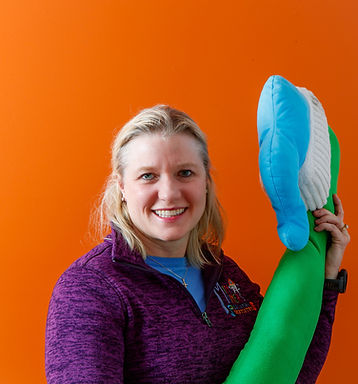
Dr. Alison Grover, a Board-Certified Diplomate pediatric dentist, practices at Mini Miners in Erie Commons, between I-25 and Highway 287.
The Extraction Clock
Pediatric dental extractions in Broomfield, CO run on 6 deadlines. The sections below take them in order.
Today: swelling, fever or a bump on the gum means a call now.
The decision: before you agree, find out whether the tooth can be kept.
Appointment day: 30 to 45 minutes in the office, with the procedure and the sedation level set in advance.
The first 48 hours: healing at home, and the signs that mean call us.
The gap: weeks, for a back baby tooth, to decide whether the space needs holding.
The 6-year molars: ages 8 to 10, the window for a damaged permanent molar.

Today: When It Can't Wait
Call the same day for facial swelling, a toothache with a fever, or a pimple-like bump on the gum beside a baby molar. That bump drains an abscess, which means the infection has spread from the tooth's nerve into the bone around its roots.
Swelling that spreads toward the eye or under the jaw, or trouble swallowing or breathing, means the emergency room.
During office hours, call (303) 500-3202 for a same-day appointment. After hours, current patients call the same number and press 2 for the on-call dentist. Our emergency dental page for Broomfield kids lists what counts as urgent.
Antibiotics alone don't cure an abscessed tooth. The nerve gets treated, or the tooth comes out.
Before You Agree: Does It Have to Come Out
Not always. The American Academy of Pediatric Dentistry's 2026 pulp therapy guidance says to consider extraction when 1 of 4 things is true:
the infection can't be stopped with pulp treatment
the bone supporting the tooth can't be regained
too little tooth is left to hold a restoration
the roots show too much resorption
If none applies, there's a way to keep the tooth, and you should hear it before anyone books an extraction. When decay has reached the pulp of a baby tooth, pulp therapy removes the infected tissue and a crown goes on after it. When decay hasn't reached the nerve, a Hall crown is placed over the tooth with no drilling and no numbing shot. White crowns, made from ceramic or zirconia, work on front teeth and back molars. The options are laid out on our page about dental restorations for Broomfield kids.
The calendar counts too. The same AAPD guidance treats a tooth that only has to last another 12 months differently from one with years to go. A baby molar due to shed next spring and one due in 4 years are 2 different decisions, even with the same cavity.
Trauma, an extra tooth in the adult tooth's path, a baby tooth that won't let the adult one in, and orthodontic planning are the other reasons. If an adult tooth is coming in behind a baby tooth that won't budge, read how tooth eruption normally goes first.

Appointment Day
The extraction itself is short once the area is numb. Plan on 30 to 45 minutes in the office.
Simple or surgical
Your treatment plan names 1 of 2 procedures. A simple extraction (code D7140) loosens the tooth and lifts it out with forceps. A surgical extraction (code D7210) removes bone or cuts the tooth into sections first, sometimes with a small flap of gum lifted back, and stitches are more likely.
What your child notices
The ceiling-mounted TV has over 70 movies to pick from. If the tooth needs an X-ray first, a camera-like X-ray machine in the room takes it, and the movie doesn't stop. The instruments are kid-sized, and the team follows a No Scary Words policy. Use the same rule at home: skip pull, shot and hurt when you talk about the visit. Parents are welcome to stay in the treatment room. Every child picks a prize from the toy tower on the way out, the same routine as a cleaning and exam visit.
Sedation, and the permit behind it
The area is numbed with local anesthetic. Laughing gas helps a nervous child relax, and moderate or deep sedation is there for complex cases or anxiety it can't settle. Mini Miners offers 3 levels in the office:
Mild: nitrous oxide (laughing gas), breathed in through the nose. Every room is plumbed for it.
Moderate: oral conscious sedation, a liquid your child drinks that combines 2 medicines, Versed and hydroxyzine.
Deep: general anesthesia, given in the office through gas and an IV. An anesthesiologist from Mile High Anesthesia or Rocky Mountain Dental Anesthesia gives it and monitors your child before and during the procedure.
Your pre-visit instructions include fasting guidelines when the level calls for them.
Colorado requires a dentist to hold a sedation permit for the level given, plus a pediatric designation to sedate children. Permits last 5 years, and renewal takes 17 continuing education credits in anesthesia or sedation (Colorado Revised Statutes 12-220-411). "We offer sedation" doesn't tell you which permit covers your child's level, so ask.
When the right room is a hospital
A healthy child can have every sedation level in the Erie office. A child with a heart condition, a bleeding disorder or a difficult airway may be safer in a hospital operating room. For children with special health care needs, see our page on dental care for special needs kids in Broomfield.
Children's Hospital Colorado runs its Dental Center at 2 metro locations, the Health Pavilion in Aurora and North Campus in Broomfield. More than 33,000 infants, children and teens visit the center each year, by its own count. It lists limited oral surgery and full-mouth treatment under general anesthesia without saying which location handles which. The one service it pins to a site is sedation for mildly anxious children, offered in Aurora only.
The First 48 Hours
Numbness lasts about 2 to 4 hours. Watch the lip, cheek and tongue for that whole stretch, because a numb child can chew a lip raw without feeling it.
Hold gauze with firm pressure on the site until the oozing stops. Cool drinks come from a cup, never a straw, and food stays cold and soft today, then back to normal as your child tolerates it. No vigorous rinsing or spitting today. From tomorrow, rinse with warm salt water after meals: half a teaspoon of salt in 1 cup of water.
For swelling, use ice on the cheek in 10-minute rounds, on and off, for the first day. Warm moist compresses take over after 24 hours. For pain, give acetaminophen or ibuprofen dosed by weight. Never aspirin. A slight fever up to 100.5°F isn't unusual in the first 48 hours. No sports or rough play today. All of this follows the AAPD's postoperative instructions for extractions.
Call us if
bleeding hasn't stopped after 2 hours of firm pressure
swelling starts after the 48-hour mark
fever climbs above 100.5°F or won't go away
stitches come out within 48 hours
pain medicine isn't controlling the pain
deep, throbbing jaw pain shows up on day 3, 4 or 5
After hours: (303) 500-3202, press 2.


The Gap: A Window Measured in Weeks
A gap left by a front baby tooth rarely needs anything. A gap left by a back baby tooth often does, and the window to hold it is measured in weeks. Here is what the research measured, tooth by tooth.
Front baby tooth, after the baby canines are in: minimal space loss, so the gap is left alone (British Dental Journal, 2018).
Upper first baby molar: 0.52 mm of space lost by 9 to 12 months, and a routine appliance isn't indicated (BMC Oral Health, 2026).
Lower first baby molar: 1.78 mm lost by 8 to 9 months, so a space maintainer is indicated and goes in within 3 months (BMC Oral Health, 2026).
Second baby molar: 2.12 mm lost by 6 months and 4.02 mm by 12 months without an appliance, more when the 6-year molar isn't in yet. A maintainer goes in as soon as the site allows (General Dentistry, 2015).
The studies disagree on which jaw loses more. The 2026 first-molar meta-analysis, 7 studies and 312 children, found the lower jaw losing more. A 2025 study of 1,596 schoolchildren in Quintessence International found slightly more in the upper jaw across all baby molars, 1.75 mm against 1.40 mm. They agree on the worst case: the second baby molar, at 2.62 mm in the 2025 data.
A maintainer cuts the loss without stopping it. In that 2025 study, children with one lost 0.59 mm on average, against 1.66 mm without. Timing beats hardware. The 2015 second-molar study found little benefit in an appliance placed 12 months or more after the extraction, since most of the space had closed inside that first year.
The 6-year molar shifts the math. A 2018 clinical guide in the British Dental Journal notes that a lost first baby molar often needs no appliance once the 6-year molar is in and meeting its opposite tooth. When 1 back tooth needs holding, the usual appliance is a band and loop: a metal band on the tooth behind the gap, with a wire loop across it that holds the space open for the permanent tooth.
The downsides, from the AAPD
The AAPD's 2024 guidance on the developing dentition lists the problems: appliances that come loose, break or get lost; plaque and cavities; interference with the adult tooth coming in; unwanted tooth movement; restricted bone growth; gum irritation; and pain. It states that evidence on whether maintainers prevent or reduce crooked bites is lacking. It weighs 10 factors before recommending one, including how far along the adult tooth's roots are and how much bone still covers it.
So the answer goes tooth by tooth. Some gaps get an appliance within weeks. Some get a look at the next visit and nothing more.

Ages 8 to 10: The 6-Year Molar Window
When a permanent 6-year molar is too damaged to keep, the age it comes out decides how well the mouth closes the gap on its own. The Royal College of Surgeons of England's 2023 guideline on first permanent molar extraction says extraction at ages 8 to 10, while the 12-year molar behind it is still developing, appears to disturb the bite less.
Deep decay and molar-incisor hypomineralization (MIH) are the usual reasons. MIH affects the enamel of a child's first permanent molars and sometimes the front teeth. It shows up as creamy white or yellow-brown patches, and the softer enamel raises sensitivity and decay risk. In more severe cases Dr. Grover may recommend crowns to protect those teeth, as explained on our white spots treatment page for Broomfield kids. Extraction enters the picture when a molar is too damaged to keep.
The age range is a guide. The X-ray decides. The old marker was the 12-year molar's root fork starting to calcify, and the guideline cites newer evidence that the molar's angle, and whether a wisdom tooth is forming behind it, may predict the result better. It also advises against pulling the matching upper molar by default, since the risk of that tooth over-erupting is small.

Your Child's Dentist: Dr. Alison Grover
Board certification here means Dr. Grover passed the American Board of Pediatric Dentistry's oral and written exam, which makes her a Board-Certified Diplomate. She holds a degree in child psychology from Wellesley College. Her DDS and general practice residency certificate come from the University of Colorado School of Dental Medicine, and her Pediatric Dental Certificate from a 2-year residency at UCLA.
She went to school in Boulder, through Fairview High School. In 2017 she and her husband found the space, then designed and built the practice from scratch. The practice started with 4 patients.
Getting Here From Broomfield
There is no Mini Miners office in Broomfield. Families who come to us for pediatric dental extractions in Broomfield, CO drive to 61 Erie Pkwy, Unit 101, in Erie Commons at the corner of Briggs Street and Erie Parkway, between I-25 and Highway 287. Take Highway 287 or the Northwest Parkway. From Broadlands, Aspen Creek, Anthem Highlands and other Broomfield neighborhoods, it's a short drive.
For everything else we do for Broomfield kids, start at our pediatric dentist in Broomfield page.

Common Questions
Will my child feel pain during the extraction?
The area is numbed with local anesthetic first, so what your child feels is pressure without pain. Laughing gas is available for a nervous child, and moderate or deep sedation for complex cases or anxiety it can't settle.
Does a loose baby tooth need to be pulled?
Usually not. A tooth loosened by the adult tooth pushing up can come out on its own. Extraction comes up when the tooth is infected, when it hurts, or when the adult tooth has come in beside it and the baby tooth still won't loosen.
Does every pulled baby tooth need a space maintainer?
No. A front baby tooth lost after the baby canines are in causes minimal space loss. A lower first baby molar loses about 1.78 mm in 8 to 9 months, so a maintainer is indicated within 3 months. A second baby molar lost before the 6-year molar arrives is the most urgent case, at about 4 mm by 12 months without one.
Can my child be asleep for the extraction?
Yes, when that's the safer plan. General anesthesia is given in the Erie office by an anesthesiologist from Mile High Anesthesia or Rocky Mountain Dental Anesthesia, and your pre-visit instructions include fasting guidelines. Once your child is asleep, you wait in the waiting room, and you're brought to the recovery room before your child wakes up. A child with a complex medical history may be safer in a hospital operating room.
Do you do pediatric dental extractions in Broomfield, CO?
Yes, for Broomfield families, at our only office: 61 Erie Pkwy, Unit 101, in Erie Commons between I-25 and Highway 287, north of Broomfield. After hours, current patients call (303) 500-3202 and press 2 for the on-call dentist.
What can my child eat after an extraction?
Cold, soft food and cool drinks the first day, from a cup and never through a straw. Normal food comes back as your child tolerates it. No vigorous rinsing or spitting until the next day, then warm salt water after meals.
Closing
Bring the X-ray if another office took one. To book pediatric dental extractions in Broomfield, CO, use the form below or call.

Monday 8 AM–5 PM
Tuesday 8 AM–5 PM
Wednesday 8 AM-5 PM
Thursday 8 AM–5 PM
Friday 8 AM–3:30 PM
Saturday Closed
Sunday Closed

Copyright © 2025 Mini Miners Pediatric Dentistry. All rights reserved.
Mini Miners Pediatric Dentistry
61 Erie Pkwy, Unit 101
Erie, CO 80516
Phone: (303) 500-3202
Text: (720) 734-5890
Email: MiniMinersPD@gmail.com
Fax: (303) 552-3700