Bleeding Gums In Children: Causes By Age And When To Worry
Written By: Logan Grover, Content Writer |
Reviewed By: Dr. Alison Grover, Board-Certified Diplomate Pediatric Dentist |
Last Reviewed: November 13, 2026 |
Most bleeding gums in children come from plaque sitting along the gumline. That's gingivitis. The American Academy of Pediatric Dentistry (AAPD) says about half of kids have it by age 4 or 5, and nearly all do by puberty. The fix is more brushing at the gumline, not less. In our office, gingivitis bleeding usually stops within 2 to 3 weeks of a cleaning and a better brushing routine.
3 signs change that answer. The first is bleeding in the same 1 or 2 spots every time. The second is bleeding that lasts past 2 weeks of good brushing. Both mean booking a dental exam now. The third is bleeding that comes with bruises or tiny red dots on the skin, and that one means calling your pediatrician.
What Do Bleeding Gums in a Child Mean?
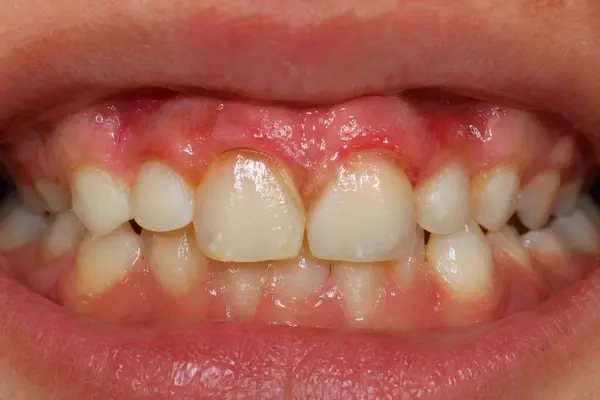
Bleeding gums in children usually mean the gum tissue is inflamed. Most of the time the cause is gingivitis: gum inflammation from plaque at the gumline, which goes away once the plaque is cleaned off. Less often, the bleeding comes from a new or loose tooth, an injury, a virus, a medicine, low vitamin C, or a blood disorder.
Healthy gums don't bleed when a child brushes well. Pink in the sink is a signal to look closer.
Common, Not Normal: Why Most Bleeding Starts at the Gumline
Plaque collects where the tooth meets the gum. When the brush misses that line, the gum swells around the plaque left behind.
Parents often assume the bleeding means their child is brushing too hard, and sometimes that's true. But when the whole mouth bleeds, the usual reason is plaque and brushing technique. AAPD guidance describes gingivitis as reversible once plaque is removed at and right under the gum edge. So brush that spot more, with a soft-bristled brush angled into the gumline. Skip the spot, and the plaque stays put (so does the bleeding).

The 3-Question Check: Where, When, What Else
These questions sort gum bleeding into 3 groups: fix it at home, book a dental exam, or call the pediatrician.
1. Where: A Single Spot or the Whole Mouth
Bleeding along most of the gumline usually points to plaque and brushing technique. Bleeding in the same 1 or 2 spots every time is different. We want those spots on an X-ray, because nobody can see bone loss by looking at the gum.
Watch which teeth bleed, too. Bleeding or a new gap at the first permanent molars or front teeth is the pattern we take most seriously. It matters more if a parent or sibling lost teeth young. Bleeding mostly on the front gums can come from mouth breathing, which dries them out.
2. When Does It Bleed, and for How Long?
Bleeding only during brushing or flossing is usually a home-care problem. Give it 2 weeks of brushing that reaches the gumline: 2 minutes, twice a day, bristles angled into the gum, and floss wherever teeth touch. If it still bleeds after that, brushing isn't the problem anymore. Book an exam.
Gums that bleed on their own are a different story. With no brushing, flossing, or bump to explain it, call your pediatrician.
3. What Else Is Going On?
Look past the gums. Some signs call for an exam with X-rays today: a permanent tooth that wiggles, a new gap, pus, or a bite that suddenly feels off.
Other clues point away from the mouth. A new medicine or a diet of only a short list of foods can be the cause. Mouth sores with a fever point to a virus. Bruises with tiny red dots on the skin point to a problem in the blood.
Causes of Bleeding Gums in Children by Age
Age is a strong clue. Under 6, bleeding usually comes from missed brushing, falls, or a virus. From 6 to 12, it follows teeth coming and going. In teens, puberty and braces take over.
Under 6: Brushing, Bumps, and a Virus
Young kids can't reach their own gumline yet. Most kids need help with brushing until about age 8, so the gumline is your job for now. Angle the bristles into the gum so they reach the edge.
Falls are the other common cause. If a fall knocks out a baby tooth, don't put it back in. That can damage the permanent tooth forming behind it, and our steps for a knocked-out tooth cover the rest. Go to the ER if your child passed out, seems confused or drowsy, or is vomiting after the fall.
A fever with mouth sores points to a virus called herpetic stomatitis. MedlinePlus, from the National Library of Medicine, says young children commonly get it the first time they're exposed to the herpes simplex virus. Fever can hit 104°F, sometimes 1 to 2 days before mouth sores and swollen gums show up. Most kids recover within 10 days. If a fever comes before the sore mouth, or your child stops drinking, call your pediatrician.
Ages 6 to 12: New Teeth and Loose Teeth
Between 6 and 12, plaque collects where baby teeth fall out and new permanent teeth come in. That's eruption gingivitis. You'll often see 1 puffy, red gum around 1 new tooth, and it settles as the tooth finishes coming in.
Mouth breathing dries out the front gums, and crowded teeth leave spots the brush can't reach. Both cause bleeding in 1 zone of the mouth instead of all over.
Ages 11 to 14: Puberty, Braces, and a Rare Gum Disease
Puberty adds a second wave. Rising hormones change how gums react to plaque, so the same plaque causes more swelling. It typically shows up from 11 to 13 in girls and 13 to 14 in boys.
Braces work like crowding: brackets leave surfaces the brush can't reach, so bleeding shows up in 1 zone. Mouth breathing, crowding, and erupting teeth all make teens more prone to gingivitis, per the AAPD.
Bleeding won't warn you about every teen gum problem. Grade C molar-incisor pattern periodontitis is a rare, fast gum disease. It can destroy bone around the first molars and front teeth while the gums still look pink. It runs in families, so we X-ray same-spot bleeding and ask about relatives who lost teeth young. You can spot some signs of gum disease at home, but bone loss only shows on an X-ray.

Can Picky Eating Make a Child's Gums Bleed?
Yes, in rare cases. A diet with almost no fruits or vegetables can lead to scurvy, a vitamin C deficiency, and bleeding gums can be one of its signs.
A 2020 case series in the Journal of Pediatric Pharmacology and Therapeutics described 5 boys treated for scurvy at a Kentucky children's hospital. All 5 had autism, 4 had bleeding or swollen gums, and their diets leaned on foods like chips, crackers, chicken nuggets, and chocolate milk.
We treat kids with autism and sensory differences, and a narrow, soft, carb-heavy diet is common in kids with autism. Scurvy is still uncommon. But if your child eats from a short list of foods and their gums start bleeding, tell your pediatrician and tell us.
When Are Bleeding Gums in Children a Sign of Something Serious?
Rarely, but it happens. Leukemia and other blood disorders can show up in the gums, and the clue is what comes with the bleeding.
The AAPD notes that leukemia can cause gum swelling and bleeding out of proportion to the plaque on the teeth. It can also cause tiny red spots called petechiae. Call your pediatrician if gum bleeding comes with any of these:
Tiny red or purple dots on the skin or inside the mouth
Bruises you can't explain
Swollen gums that don't match how well your child brushes
Gums that bleed on their own or won't stop
Gingivitis is far more common. Still, bleeding plus any of these signs is worth a call before the next dental visit.
Medicines are easy to overlook. About half of people taking phenytoin, nifedipine, or cyclosporine develop gum overgrowth, the AAPD reports, and it can start within 3 months. Phenytoin is a seizure medicine. The thick gum traps plaque and bleeds. Bring the bottle to your child's visit, and never stop a medicine on your own.

Should Kids Keep Brushing When Their Gums Bleed?
Yes. Keep brushing and flossing the spots that bleed, because bleeding from plaque calms down once the plaque is gone.
Use a soft-bristled toothbrush.
Angle the bristles into the gumline and brush 2 minutes, twice a day.
Floss wherever 2 teeth touch, which for most kids starts around age 2 to 3.
Keep helping with brushing until about age 8.
If mint or bristles bother your child, try a non-foaming, non-mint toothpaste or a 3-sided brush.
Give it 2 weeks, and book an exam if the bleeding hasn't faded by then.
What Happens at a Gum Check at Mini Miners
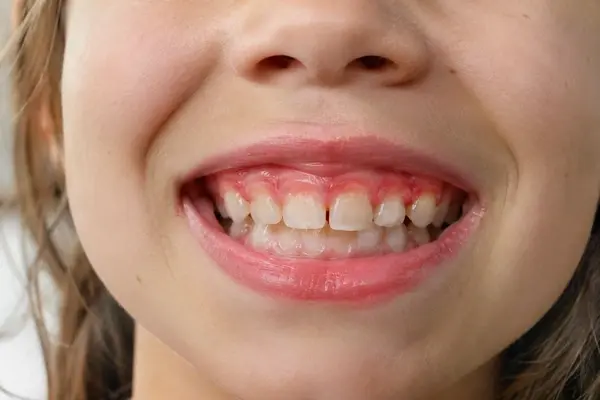
At Mini Miners Pediatric Dentistry, a gum check is an exam, a cleaning above and right below the gumline, and X-rays for the spots that need them. Most gingivitis takes 1 visit and a recheck.
The cleaning itself is the treatment, because removing plaque and hardened tartar is what lets the gum heal. Our instruments and X-ray sensors are child-sized. The camera-style X-ray unit works at the chair, so your child keeps watching a movie (they pick from more than 70). Parents can stay in the room, and kids who won't lie back get cleaned partly upright.
Our soft tissue laser treats some gum problems, but it isn't the answer for bone loss. If X-rays show bone loss, we refer to a periodontist (a gum specialist) and make the connection for you. That's the same path we follow for gum disease treatment at our Erie office.
Bleeding that won't stop is a dental emergency. Call (303) 500-3202. After hours, current patients can call the same number and press 2 to reach our on-call dentist.
Book a Gum Check in Erie
Most bleeding gums in children settle within 2 to 3 weeks once brushing reaches the gumline. If they don't, or the bleeding sits in 1 spot or comes with bruises or red dots, book a gum check at our Erie office. Call (303) 500-3202 or text (720) 734-5890.
Frequently Asked Questions
Are bleeding gums in children normal?
Bleeding gums in children are common, but they mean the gums are inflamed. Healthy gums don't bleed when a child brushes well. The AAPD says about half of kids have gingivitis by age 4 or 5, and it reverses once plaque is cleaned off at the gumline.
How long until a child's bleeding gums stop?
When plaque is the cause, bleeding usually stops within 2 to 3 weeks of a cleaning and better brushing at the gumline. If the gums still bleed after 2 weeks of good brushing, book a dental exam instead of waiting for the 6-month checkup.
Should my child stop flossing if their gums bleed?
No. Bleeding during flossing usually means plaque has been sitting between the teeth, and daily flossing is how it clears. Floss gently wherever 2 teeth touch, and book an exam if the same spot still bleeds after 2 weeks.
Can brushing too hard make my child's gums bleed?
Sometimes. Parents often blame hard brushing, but when the whole mouth bleeds, the usual cause is plaque and brushing technique. Use a soft-bristled brush angled into the gumline for 2 minutes, twice a day.
Can bleeding gums in children be a sign of leukemia?
They can, but gingivitis is far more common. Leukemia can cause gum swelling and bleeding out of proportion to the plaque on the teeth, according to the AAPD. Call your pediatrician if bleeding gums come with unexplained bruises or tiny red or purple dots on the skin.
Do braces make kids' gums bleed?
They often do, because brackets leave surfaces the brush can't reach along the gumline. Brush around each bracket and floss every day. If the same spot still bleeds after 2 weeks, we check it with an X-ray.



Comments