Dental Care For Kids With ADHD: Meds, Snacks, And Visits
Written By: Logan Grover, Content Writer |
Reviewed By: Dr. Alison Grover, Board-Certified Diplomate Pediatric Dentist |
Last Reviewed: November 15, 2026 |
Studies link ADHD in kids to more cavities and more dental injuries. A 2022 review of 13 studies in Caries Research found that children with ADHD had 3.31 times the odds of cavities. A 2025 study of 3,402 kids found the gap held even in kids who brushed well and ate little sugar. So dental care for kids with ADHD needs 3 parts: short routines that fit how ADHD works, a snack and brushing plan built around the medication day, and dental visits set up for kids who can't sit still. ADHD is common, too. About 7 million U.S. kids ages 3 to 17, or 11.7%, have a current diagnosis, based on 2024 survey data from the CDC.
Dental care for kids with ADHD is regular pediatric dental care adjusted for how ADHD affects attention, routines, impulse control, and eating. At home, it means short, visual brushing routines and planned snack times. In the office, it means fluoride varnish, extra time, breaks, distraction, and shorter steps so a child can finish a cleaning or treatment.
Do Kids With ADHD Get More Cavities?
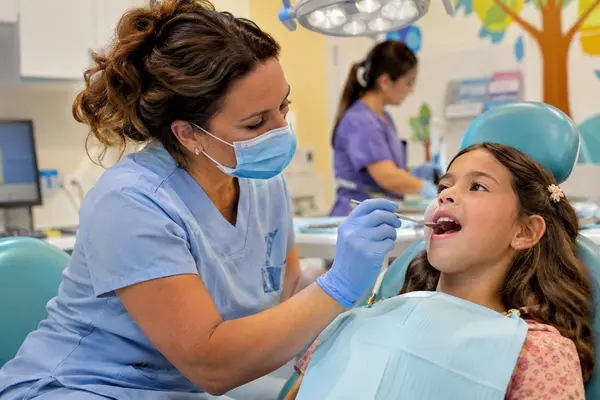
Yes, on average. In 2 recent studies, kids with ADHD or more ADHD symptoms had 2.16 and 3.31 times the odds of cavities, and brushing habits don't explain all of it.
The 2022 Caries Research review pooled 13 studies and landed on 3.31. Its authors also rated those studies at high risk of bias for how they handled other things that affect cavities. Treat that number as a rough guide.
The 2025 study from Spain, published in the same journal, looked at 3,402 kids ages 6 to 14. Kids with more ADHD symptoms had 2.16 times the odds of cavities and 1.64 times the odds of bleeding gums. The cavity link held in kids with good hygiene, low sugar intake, and regular dental visits.
That last finding matters for your plan. A sticker chart can't carry the whole load, which is one reason kids get cavities despite brushing. Office prevention helps fill the gap. We apply fluoride varnish at the end of each checkup, with your permission.
Daily care is still harder with ADHD, in ways you can predict. A child may forget a step they know, like flossing. Starting can be harder than finishing. A 2-minute brush can feel endless, so they rush. And small rewards that come right away work better than big ones that come later.
ADHD Medication and Teeth: Appetite vs Dry Mouth
Dry mouth gets the warnings. But in the FDA's trial data for kids on Vyvanse, decreased appetite showed up almost 8 times as often.
The FDA labels for Vyvanse and Concerta report these side effects in kids:
Decreased appetite: 39% of kids ages 6 to 12 on Vyvanse, vs 4% on placebo. Concerta's label doesn't list it for kids. For teeth, skipped meals can turn into grazing later.
Weight loss: 9% on Vyvanse, vs 1% on placebo. It's not on Concerta's list for kids either, and it's a question for the prescriber.
Dry mouth: 5% on Vyvanse, vs 0% on placebo. Concerta's label doesn't list it for kids. Less saliva means less rinsing of acid off the teeth.
The Vyvanse numbers come from a 4-week trial in the FDA label for Vyvanse. Concerta's FDA label pools 4 trials in kids and lists only effects seen in at least 2% of them, so dry mouth didn't make its list for kids. It does for adults, at 14%. Dry mouth is real, but it depends on the drug.
Appetite is the more common change, and the Vyvanse label warns that stimulants have been tied to weight loss and slower growth in kids.
For teeth, the timing of eating matters. A child who eats little at lunch may come home starving. If that hunger turns into snacking until dinner, teeth take an acid hit with every handful.
Don't change a dose or its timing to fix a dental problem. That's your child's prescriber's call. Bring the tooth side to us.
For a dry mouth, water comes first. The American Academy of Pediatric Dentistry's nutrition policy names fluoridated water as the preferred drink for kids and teens. Keep juice and sports drinks to mealtimes.
The Medication-Day Plan for Snacks, Water, and Brushing
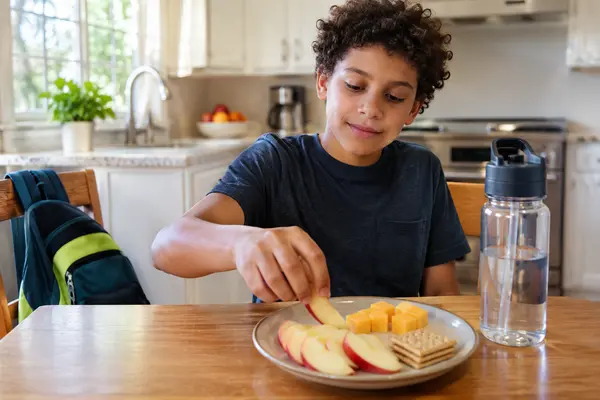
Build tooth care around when your child eats and when they focus best. Use this as a starting point and shift the times to fit your child's day.
Morning: brush for 2 minutes at the same sink, in the same order, with a picture chart.
School hours: pack a water bottle instead of juice or sports drinks.
After school: serve 1 sit-down snack at the table, then water.
Early evening: pick a time the kitchen closes, then brush while your child can still focus.
Bedtime: water only after the last brush.
Every time your child eats sugar or starch, mouth bacteria make acid for a while. A single snack means 1 acid hit. Grazing all afternoon means hit after hit.
The goal is fewer eating sessions and a last brush your child can finish. If focus fades as the evening goes on, move the kitchen-closing time and the brush earlier. Then hold to water until bed.
Brushing Routines That Work With ADHD
Keep brushing short, visual, and in the same spot every time. ADHD makes it hard to start a task and remember the steps, so the routine has to do the remembering.
Brush for 2 minutes, 2 times a day. A timer or 2 short songs makes the end clear.
A picture chart by the sink shows each step in order.
Use the same sink and the same order at the same time each day.
Help with brushing until around age 8. Most kids don't have the coordination to brush well on their own before then.
Rewards work best when they're small and immediate. Praise counts too. The AAPD's behavior guidance for dentists recommends specific praise over a generic "Good job," and the same idea carries over to the sink.
Is an Electric Toothbrush Better for a Child With ADHD?
Often, yes, because the built-in timer does the counting. A 2014 Cochrane review of 56 trials found powered brushes cut plaque by 21% and gingivitis by 11% compared with manual brushes after 3 months of use. Most of those trials were in adults, though, and the review doesn't report results for kids with ADHD.
A soft manual brush with a sand timer is a fine backup for kids who hate the buzz. Sensory issues on top of ADHD call for more than a new brush, and a sensory-friendly dental visit has its own setup.

Chipped Teeth, Grinding, and Gums: What the Research Shows
Dental injuries have the strongest evidence. The links to grinding and gum disease are weaker.
A 2020 review in the Journal of Attention Disorders looked at 27 studies. It found more dental injuries in kids with ADHD, along with more decayed tooth surfaces and more plaque. A 2024 review put the odds of a dental injury at 1.98 times higher.
A mouthguard is the simplest protection. The AAPD's sports-injury policy calls for mouthguards for patients at higher risk of mouth and face injuries. Our team recommends a custom mouthguard for sports, especially contact sports.
If a permanent tooth gets knocked out, call (303) 500-3202 right away, because time matters. After hours, current patients can press 2 to reach our on-call dentist, and we'll do everything we can to see your child promptly. Read the knocked-out tooth guide now, before you need it.
Grinding is less clear. A new study of 181 kids with ADHD in Iran found 70 had at least mild grinding. Grinding tracked how severe a child's ADHD was. It didn't differ between kids on methylphenidate, kids on atomoxetine, and kids on no medication. That study had no group of kids without ADHD to compare against, and a review plan published in 2025 set out to answer that question.
Gums show a similar pattern. A 2022 review of 7 studies found more gum bleeding in kids with ADHD, but no difference in plaque or gingivitis. That fits the bleeding finding in the 2025 Spanish study.
How We Help Kids Who Can't Sit Still
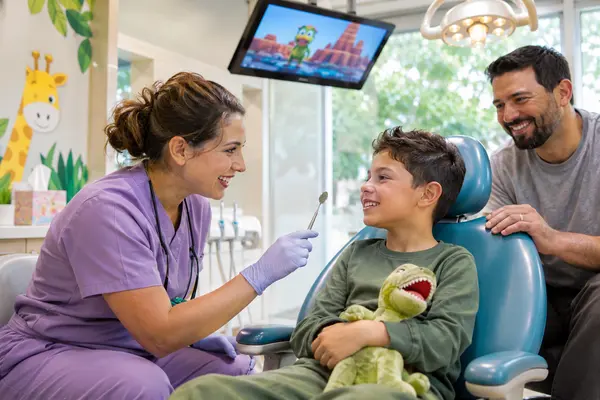
We change the room and the pace so your child doesn't have to hold still for long. Mini Miners Pediatric Dentistry was built by parents of a child with special needs. Dr. Alison Grover is UCLA-trained, holds a child psychology degree from Wellesley College, and is a Board-Certified Diplomate Pediatric Dentist.
We schedule extra time for kids with special needs. Treatment gets broken into shorter segments with breaks, and appointment length follows your child's tolerance. Kids pick the movie on a ceiling-mounted TV, our chairs adjust for kids who feel anxious lying back, and we offer seating beyond the traditional dental chair.
Private rooms replace open bays. Lighting adjusts, sunglasses are on hand, and your child gets a say in the sounds and music. New tools get introduced slowly, and we don't push past your child's comfort level.
Kids choose their toothpaste and fluoride flavors, and flavorless fluoride is an option. The varnish hardens when it touches saliva, so kids can eat and drink right after. There's no waiting rule to break.
When a tooth needs treatment, Hall crowns are a non-invasive option that doesn't require drilling. Scary words like "shot" and "needle" stay out of the room, and parents are always welcome in the treatment room.
New patients can start with a happy visit. Your child plays in the waiting room, walks through the office, sits in the chair, and picks a prize. The full list of accommodations is on our special needs dental care page.
When Does Sedation Make Sense for a Child With ADHD?
Sedation makes sense for longer procedures, extensive work, or a child who isn't calm on nitrous oxide alone. We match the level to your child's age, anxiety level, the amount of work needed, medical history, and past dental visits.
We offer 3 levels of sedation:
Mild: nitrous oxide. Your child picks a flavor like bubble gum or mango, stays awake, and can go back to school right after.
Moderate: oral conscious sedation, a liquid mix of Versed and hydroxyzine. Kids stay conscious but drowsy and need an adult watching them for the rest of the day.
Deep: general anesthesia, given in our office by an anesthesiologist from Mile High Anesthesia or Rocky Mountain Dental Anesthesia. They bill separately and don't take insurance.
Sedation still carries real risk. The AAPD and American Academy of Pediatrics sedation safety guideline states that procedural sedation in kids "has serious associated risks." It also calls for a full medication history, including dose and time, before sedation. That's one more reason to tell us about ADHD medication. Parents weighing the first 2 levels can compare nitrous oxide vs sedation in more detail.

What to Tell Us Before Your Child's Visit
Tell us what works at home and what sets your child off, and we'll plan the visit around it. You can call (303) 500-3202 or text (720) 734-5890.
Our special needs intake asks about sensory sensitivities, how your child communicates, behavior triggers, past medical and dental visits, and comfort measures that work at home. For ADHD, add 3 more details: the medication name, dose, and time your child takes it; the time of day your child focuses best, which the AAPD lists as a scheduling factor; and a comfort item from home, like a favorite stuffed animal.
Should My Child Take ADHD Medication Before a Dental Visit?
Give it as usual unless your child's prescriber says otherwise. Write down the name, dose, and time so we have it. When sedation is planned, follow our pre-visit instructions, which include fasting guidelines, and ask the prescriber about the medication before that day.
Dental Care for Kids With ADHD FAQ
Is dental care for kids with ADHD different from regular pediatric dental care?
The exams, cleanings, and fluoride are the same. What changes is the pacing, the visit timing, and the plan for home, since a 2022 review of 13 studies found 3.31 times the odds of cavities in kids with ADHD. Expect breaks and shorter steps in the chair.
Where can I find dental care for kids with ADHD near Erie, CO?
Mini Miners Pediatric Dentistry is at 61 Erie Pkwy, Unit 101, in Erie. We schedule extra time for kids with special needs, offer 3 levels of sedation, and run happy visits for kids who need to see the office first. Call (303) 500-3202 or text (720) 734-5890.
Do ADHD medications cause cavities?
The FDA labels list effects that can raise cavity risk. In the Vyvanse trial for kids 6 to 12, 5% had dry mouth and 39% had decreased appetite. Less saliva and all-afternoon snacking both feed cavities, so water between meals and set snack times help.
Are kids with ADHD more likely to knock out a tooth?
Research points that way. A 2024 review found 1.98 times the odds of a dental injury in people with ADHD, and a 2020 review of 27 studies found more dental injuries in kids with ADHD. A custom mouthguard for sports is the simplest protection.
What if my child with ADHD can't sit still in the dental chair?
We break treatment into shorter segments with breaks, offer seating beyond the traditional dental chair, and play movies on ceiling-mounted TVs. Sedation is an option when it's appropriate for the care your child needs.
How often should a child with ADHD see the dentist?
We recommend checkups every 6 months, starting with the first tooth or by age 1. Kids with more ADHD symptoms had 2.16 times the odds of cavities in a 2025 study, so ask about a prevention plan built around your child's risk. For kids with special needs, our team documents medical necessity for more frequent visits.


Comments