What Should You Expect From A Sensory Processing Disorder Dentist In 2026?
Written By: Logan Grover, Content Writer |
Reviewed By: Dr. Alison Grover, Board-Certified Diplomate Pediatric Dentist |
Last Reviewed: October 1, 2026 |
A sensory processing disorder dentist changes the light, the sound, the chair, the flavors and the pace of a visit to fit how your child takes in the world. The starting point isn't a label. It's a list of what sets your child off.
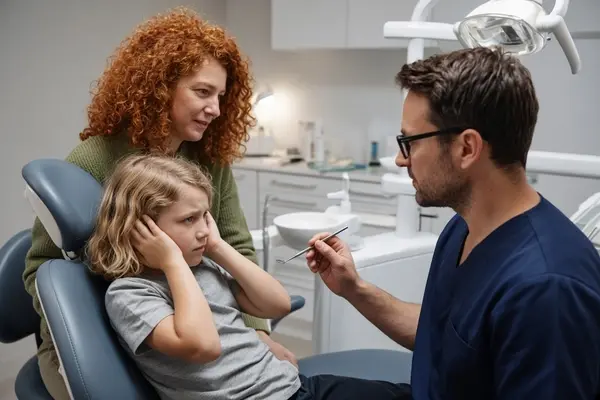
That list does more work than a diagnosis. SPD isn't a diagnosis in the DSM-5, the manual US clinicians use. In 2012, the American Academy of Pediatrics (AAP) advised pediatricians against diagnosing it, because there's no agreed way to do so. Your child's reactions are still real. A suction tip can sound like an alarm. Mint paste can feel like it burns.
A sensory processing disorder dentist is a dentist, often a pediatric specialist, who adjusts lighting, sound, chair position, flavors and pacing for children who over-react or under-react to sensory input. The American Academy of Pediatric Dentistry counts sensory impairments among special health care needs, so these changes belong to standard special needs dental care.

Does Your Child Need an SPD Diagnosis First?
There's no formal SPD diagnosis to get. What helps at the dentist is knowing your child's triggers, and that doesn't depend on a label.
A 2022 review in a psychiatry journal notes that SPD isn't in the DSM-5 or the ICD, the 2 main diagnostic systems. The same review reports that the AAP's 2012 policy advised against diagnosing SPD, since there's no universally accepted diagnostic framework for it.
Sensory differences do appear inside one official diagnosis. The autism criteria in the DSM-5 include "hyper- or hyporeactivity to sensory input." The CDC's summary of those criteria gives examples like "adverse response to specific sounds or textures." Plenty of kids react this way with no autism diagnosis.
The dental side doesn't hinge on the label either. The American Academy of Pediatric Dentistry (AAPD) defines special health care needs as "any physical, developmental, mental, sensory, behavioral, cognitive, or emotional impairment or limiting condition" that needs specialized services. Sensory is right there in the list.
Our special needs care in Erie starts with an intake that asks about 4 things: your child's sensory sensitivities, communication preferences, behavioral triggers, and previous health care experiences.
How Common Are Sensory Issues in Kids?
More common than most parents expect. A 2009 study in the Journal of Abnormal Child Psychology looked at 925 children aged 7 to 11. In it, 16% of parents said at least 4 touch or sound sensations bothered their child.
A 2004 survey of kindergarten parents in the American Journal of Occupational Therapy found 96 of 703 children (13.7%) met screening criteria for sensory processing problems. Counting every enrolled kindergartner and assuming families who didn't reply had no concerns, the estimate dropped to 5.3%.
Now compare autism. The CDC's latest count, from 2022 data, is about 1 in 31 eight-year-olds, or 3.2%. Every one of those sensory estimates runs higher than that.
So a child can gag at toothpaste and melt down at haircuts with no autism diagnosis at all. Our guide to dental visits for autistic kids covers the autism side. This page is for every family dealing with sensory reactions, diagnosis or not.

How Each Sense Plays Out in the Dental Chair
Some kids over-react to sensations and some under-react. The DSM-5 wording covers both, "hyper- or hyporeactivity," so a good visit plan starts with knowing which way your child leans.
Under-reacting has a dental catch. The DSM-5 examples include "apparent indifference to pain/temperature." A child who barely registers pain may never tell you a tooth hurts, so a cavity can grow before anyone knows. That's 1 more reason to keep the 6-month checkups the AAPD recommends.
Over-reacting is easier to spot. This table maps the common triggers to what we've set up at our Erie office:
Sense | What can bother your child | What we do at Mini Miners |
Sight | Bright overhead light | Adjustable lighting and sunglasses; ceiling TVs with more than 70 movies |
Sound | Suction, the polisher's buzz | Your child controls sounds and music; private treatment rooms instead of an open bay |
Touch | Tools and fingers in the mouth | Kid-sized tools; your child sets the pace |
Taste | Mint, strong flavors | Your child picks the cleaning paste and fluoride flavor; flavorless fluoride is on the menu |
Lying back | Reclining feels wrong | Adjustable chairs, so a child can sit partway up for cleanings and X-rays |
Changes | Moving rooms, new machines | X-rays in the same chair with a handheld unit; nitrous oxide plumbed into every room |
Crowds | A busy office | We can book a quieter time of day |

What a Sensory-Friendly Visit Looks Like at Mini Miners
It starts before any treatment, with a happy visit. Your child can play in the waiting room, walk through the office, sit in a chair, and get a prize. No treatment is planned.
Then the real visit follows what we learned:
Your child sets the pace, and we change the length of the visit to fit.
Before we start, your child picks the movie, the cleaning paste flavor, and the fluoride flavor.
Our team skips scary words like "shot," "hurt," "pain," "needle" and "bleeding."
You can stay. Parents are always welcome in our treatment rooms.
Our fluoride varnish lets kids eat and drink right after, so nobody has to wait on the drive home.
Those choices matter more than they look. A child didn't pick this appointment, so small choices give some control back, and control is most of what dental fear comes down to.
My starting point with these kids is that they can handle more than adults expect, given enough explanation and enough patience. They often surprise their own parents. I also keep visits short and end them on a good note on purpose. The goal is a child who's willing to come back.

Do Sensory-Adapted Dental Rooms Work?
They calm the body, but they don't take away pain. That's the plain read of a 2023 trial.
In a 2023 randomized crossover trial in JAMA Network Open, 162 autistic children with an average age of about 9 had cleanings in 2 rooms. One was a regular dental room. The other had dimmed lights, calming projections, calming music, and a weighted "butterfly" wrap that gave deep pressure. 138 kids finished both visits.
In the adapted room, kids showed lower physical stress, measured through skin conductance. They also showed less distress on video, with effect sizes (Cohen's d) of -0.84 to -1.19. Pain and sensory discomfort scores showed no significant difference.
So use both. Room changes help a child stay calm, and numbing still does its job for anything that hurts. The authors wrote that the setup "may also be beneficial for populations beyond autism," though the trial only tested autistic kids.
When Sedation Makes Sense for a Sensory Kid
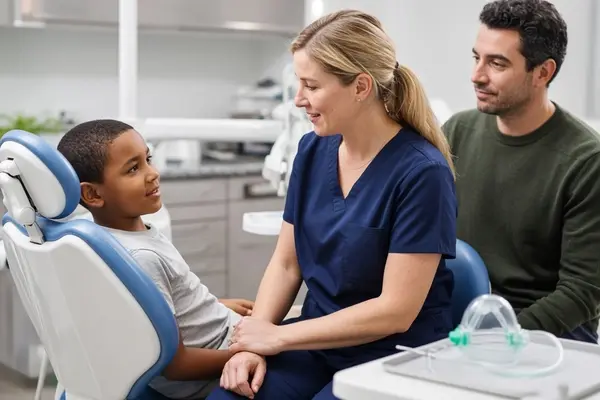
Sedation is there when room changes and pacing aren't enough. We offer 3 levels in our office:
Option | What it is at Mini Miners | How your child feels |
Nitrous oxide | Laughing gas mixed with oxygen, plumbed into every treatment room | Awake and able to respond; wears off quickly |
Moderate sedation | 2 liquid medicines by mouth, Versed and hydroxyzine | Awake but drowsy, and may not remember much |
General anesthesia | Gas and an IV, given in our office by an anesthesiologist from Mile High Anesthesia or Rocky Mountain Dental Anesthesia | Completely asleep and unaware |
Moderate sedation is often all a child needs to get through a cleaning and X-rays. And because nitrous reaches every room, a child who needs it stays in the same chair. For a sensory kid, a room change can undo the settling in that already happened.
During general anesthesia, parents wait in the waiting room, and we bring you back to recovery before your child wakes up. Our sedation options page covers each level.

What Toothpaste Works for a Child With Sensory Issues?
The one your child will let in their mouth. If taste or texture is the problem, the AAPD's special needs guideline says a toothpaste without sodium lauryl sulfate (SLS) can be used instead. SLS is the ingredient that makes paste foam.
At the office, your child can pick a fluoride flavor or go flavorless.

What to Tell Us Before Your Child's First Visit
Bring notes on the same 4 things our intake asks about, plus 1 more:
Sensory sensitivities: the lights, sounds, textures and tastes your child can't stand.
Communication preferences: how your child shows you they're done.
Behavioral triggers: what sets off a meltdown, and what calms it.
Previous health care experiences: how the last doctor or dentist visit went.
Whether your child will lie back or needs to sit up.
Cost is published. Without insurance, the Mini Miners Membership Plan is $300 a year for toddlers from first tooth to age 3. For kids 4 and up, it's $420 a year. It covers 2 cleanings, 2 exams, needed X-rays and 2 fluoride treatments a year. It also includes 1 emergency exam a year if needed, plus up to 20% off other treatment (some exclusions apply). Uninsured kids 3 and under can have a first visit for $75. We also take most dental insurance.
Plan on a checkup every 6 months, the AAPD standard.
Book a Sensory-Friendly Visit in Erie
If you've been looking for a sensory processing disorder dentist near Erie, start with a happy visit and your notes on your child's triggers. Call Mini Miners Pediatric Dentistry at (303) 500-3202 or text (720) 734-5890. We're at 61 Erie Pkwy, Unit 101, in Erie Commons at the corner of Briggs Street and Erie Parkway.
Sensory Processing Disorder Dentist FAQ
Can a dentist diagnose sensory processing disorder?
No. Dentists don't diagnose SPD, and SPD isn't a diagnosis in the DSM-5. In 2012 the AAP advised pediatricians against diagnosing it because no agreed framework exists. A dentist can still plan the visit around your child's sensory triggers.
Do I need a diagnosis to see a sensory processing disorder dentist?
SPD itself isn't a formal diagnosis, so there isn't one to get. The AAPD counts any sensory impairment or limiting condition that needs specialized services as a special health care need. Our intake at Mini Miners asks about your child's sensory sensitivities, communication preferences, behavioral triggers and previous health care experiences.
What does a sensory processing disorder dentist do differently?
They change the setting and the pace. At Mini Miners that means adjustable lighting and sunglasses, control over sounds and music, and private treatment rooms. Kids can sit partway up, pick from more than 70 movies, and choose flavors, including flavorless fluoride. A 2023 trial of 162 autistic children found a sensory-adapted room lowered stress and distress during cleanings.
Will my child with sensory issues need sedation?
Not necessarily. Sedation is there for when room changes and pacing aren't enough. Mini Miners offers nitrous oxide in every room, moderate sedation by mouth, and general anesthesia given in the office by an anesthesiologist.
Can I stay with my child during the visit?
Yes. Parents are always welcome in our treatment rooms at Mini Miners. The exception is general anesthesia, when parents wait in the waiting room and come back to recovery before the child wakes up.
How often should a child with sensory issues see the dentist?
Every 6 months, the AAPD standard, unless the dentist sets a closer schedule for higher cavity risk. Kids who under-react to pain may not complain about a sore tooth, so regular checkups catch what they don't report.


Comments