Best Toothbrush For Special Needs Kids: Match The Barrier
Written By: Logan Grover, Content Writer |
Reviewed By: Dr. Alison Grover, Board-Certified Diplomate Pediatric Dentist |
Last Reviewed: November 19, 2026 |
The best toothbrush for special needs kids is the one your child lets you use twice a day: soft bristles, a small head and a handle someone can control. Electric or manual matters less than most lists claim. A Cochrane review of people with intellectual disabilities found the 2 types clean about the same. So the better question is what stops brushing in your house.
The CDC estimates about 1 in 31 children age 8 had been identified with autism in 2022. The 2023-2024 National Survey of Children's Health, cited in the AAPD's special health care needs guideline, found 21.5% of U.S. kids had a special health care need. Noise, taste, gagging, a weak grip or a closed mouth can end brushing before it starts.
What Is the Best Toothbrush for Special Needs Kids?
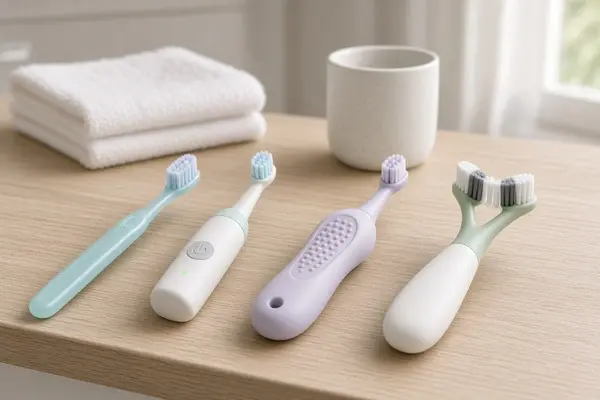
The best toothbrush for special needs kids has soft bristles, a small head and a handle that fits whoever is brushing. Match the type to the barrier: a manual brush for kids who hate buzzing, a thick handle or electric brush for a weak grip, and a 3-sided brush when a parent brushes a child who won't open wide.
Soft bristles and a small head are also what the federal Head Start program suggests for children with disabilities. The ADA recommends soft bristles for everyone because they're less likely to scrape the gums.

Is an Electric Toothbrush Better for Kids With Special Needs?
Not on cleaning alone. A 2019 Cochrane review of people with intellectual disabilities found electric and manual brushes probably work about the same, with no difference in gum inflammation across 2 trials and 120 people. A 2022 systematic review in Special Care in Dentistry, covering people with physical or intellectual disabilities, found no clinical difference in 25 comparisons. In 13 of them, a caregiver did the brushing.
Cochrane rates its finding moderate certainty, and the 2022 review calls its evidence low. A motor alone won't buy a cleaner mouth.
Electric still earns a spot. The ADA says people with disabilities or dexterity problems may find a powered brush easier to use, and the AAPD's guideline says electric brushes may help patients stick with brushing. If the buzz makes your child giggle, use it. If it makes your child clamp shut, a soft manual brush cleans about as well.
Another finding for parents who brush for their child: in the same Cochrane review, 1 trial of 18 people found carers using a specially designed manual brush got gums less inflamed than with a regular brush. Cochrane rates that evidence very low certainty, so treat it as a hint.

Match the Brush to the Barrier
Watch where brushing breaks down, then change 1 thing at a time. Brushing that keeps getting cut short is a cause of the common dental problems in kids with special needs, so aim for daily before perfect.
Noise or vibration
Start with a soft manual brush with a small head. Seat your child with you behind them, and use a fluoride paste in a flavor your child picks. A manual brush is silent, and the reviews above found it cleans about as well. Some kids accept an electric brush later if they hold it, switch it on and feel the buzz on their hand first. Some never do, and that's fine. Sound sensitivity often shows up at the dentist too, so our autism-friendly visits let your child control the sound and music.
Texture or taste
Try extra-soft bristles with your child seated upright, plus a nonfoaming paste that has fluoride. Bristles that feel like needles will stop brushing fast. If your child refuses nylon bristles, a silicone brush can be a step toward soft nylon. For taste and foam, the AAPD guideline allows a nonfoaming toothpaste when a child can't stand regular paste.
Gagging
Use the smallest head that still reaches the back teeth, and keep your child's head upright or turned to the side. A big brush head touches the back of the mouth and can set off the gag, so brush the back molars last. Head Start warns against tipping the head far back, since saliva can run down the throat. A nonfoaming paste, measured for your child's age, can help too.
Weak grip or limited hand control
Try a thick or built-up handle, or an electric brush, with you behind your child and your hand over theirs. Head Start suggests a thick-handled brush, a handle pushed through a tennis ball, or a hair band or hook-and-loop strap around the hand. An electric brush helps most here, since the motor does the scrubbing a weak hand can't. Either way, an adult should put the paste on the brush.
A mouth that won't open, or a child who bites
Try a 3-sided brush with a long, sturdy handle, with your child on the floor or a beanbag and their head supported. The brush has bristles on the outside, inside and top of each tooth, so a single pass covers more when your window is short. The long handle keeps your fingers clear. If your child bites down, hold still and wait for the jaw to relax, since pulling turns brushing into a tug-of-war. If biting happens every night, ask your child's dentist whether a mouth prop would help.

Do 3-Sided or U-Shaped Toothbrushes Work?
A 3-sided brush can help a parent cover more surfaces in less time. U-shaped "hands-free" brushes have weaker support: the only controlled trial we found showed little plaque removal.
In that 2020 trial, published in the International Journal of Environmental Research and Public Health, 22 adults each tried a U-shaped automatic brush, a standard electric brush and their usual brushing. The share of tooth sites with plaque fell 11 points with the U-shaped brush, 58 with the standard electric brush and 56 with usual brushing. The authors wrote that its use "cannot be recommended for regular oral hygiene at home."
That trial tested adults and 1 device, so it doesn't settle the question for kids, and we couldn't find published results in children yet. If you use one anyway, keep an eye on your child's gums. Red, puffy gums that bleed when brushed usually mean plaque is staying behind.

What Is the Best Position for Brushing a Special Needs Child's Teeth?
The best position lets you see every tooth while your child feels secure. Head Start's toothbrushing positions guide for children with disabilities describes 4 setups, each with you behind or above your child.
Floor: your child sits on the floor, and you sit behind on a chair or stool with their head against your lap.
Beanbag chair: the same setup, for a child who can't sit up alone.
Bed or sofa: your child lies with their head in your lap while your arm supports the head and shoulders.
Chair or wheelchair: stand behind it and brace your child's head against the chair or your body. Lock the wheels first.
In any of these, keep the head upright or turned to the side so saliva doesn't run down the throat, which the guide flags for kids with a weak swallow. Plaque left along the gumline is one reason kids get cavities despite brushing, so pick the position that shows you the back teeth.
We use the same idea in our office. The chair stops wherever your child wants it to stop, and we can clean teeth and take X-rays with your child sitting mostly upright. Your bathroom doesn't have to be the brushing spot either. If brushing there has turned into a fight, try the couch.

Toothpaste for Sensory Kids: What the AAPD Guideline Allows
Use a fluoride toothpaste your child will accept, in the right amount for their age. The AAPD's guideline on special health care needs says that if sensory issues make regular paste intolerable, a nonfoaming toothpaste, a fluoride mouthrinse or another option can go on the brush instead. For kids under 6, the ADA says to skip mouthwash unless a dentist recommends it, so check with your child's dentist before trying a rinse.
The ADA's amounts are a smear the size of a grain of rice under age 3 and a pea-sized amount from age 3. Head Start advises that an adult put the paste on the brush, and the ADA says to keep helping until your child can spit out the extra. Getting how much toothpaste right matters more when a child can't spit.
Flavor can make or break this. At our office, kids pick their cleaning paste and fluoride flavors, and fluoride also comes flavorless. A flavor your child already accepts in the chair is a good first try at home, and taste is one of the senses we plan around in a sensory-friendly visit.

What We Do in the Chair, and How to Copy It at Home
At Mini Miners Pediatric Dentistry, we pace special needs visits to the child, with no pushing beyond comfort levels, and we keep visits short and end them on a good note. After years of these visits, our view hasn't changed: our special kiddos can do far more than anyone expects. Dr. Alison Grover is a board-certified pediatric dentist who completed a 2-year pediatric residency.
Every instrument and sensor we use is sized for a child's mouth. Kids pick from over 70 movies on ceiling TVs, and parents are always welcome in the treatment room. Happy visits let a child explore the office with no treatment planned. When a cleaning and X-rays are too much, moderate sedation is often all a child needs, and our sedation options page has the details.
At home, copy what works in the chair. Keep sessions short, end on a good note, and let your child do part of the job, like holding the brush, picking the flavor, starting the song or counting teeth. Then finish the brushing yourself.
If brushing at home keeps failing, our special needs dental care team in Erie can help. Call (303) 500-3202 to set up a happy visit.
Special Needs Toothbrush FAQ
What is the best toothbrush for special needs kids with autism?
Start with a soft, small-headed manual brush if noise or vibration bothers your child, and try electric only if the buzz doesn't. The CDC estimates about 1 in 31 children age 8 had been identified with autism in 2022, and sensory triggers differ from child to child. Change 1 thing at a time and watch what helps.
Is an electric toothbrush the best toothbrush for special needs kids?
Not for cleaning alone. A 2019 Cochrane review found electric and manual brushes probably work about the same for people with intellectual disabilities, based on 2 trials with 120 people. An electric brush helps most when a weak grip is the barrier.
How often should I replace my child's toothbrush?
The ADA says every 3 to 4 months, or sooner if the bristles look matted or frayed. Kids who chew on their brush can wear it out faster, so check the bristles often.
How much toothpaste should a child who can't spit use?
Use the ADA amounts: a smear the size of a grain of rice under age 3 and a pea-sized amount from age 3. An adult should put the paste on the brush and keep helping until your child can spit out the extra.
How long should a special needs child brush?
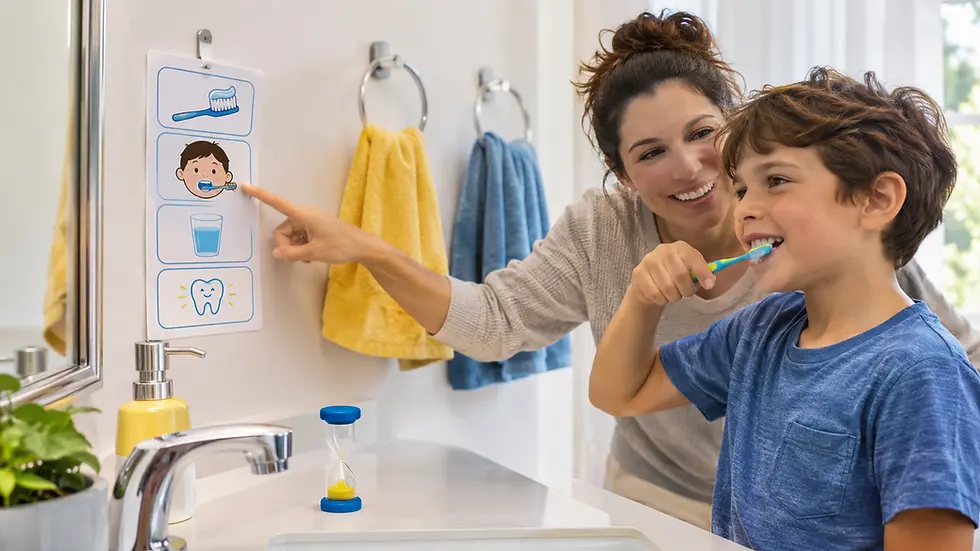
The ADA's goal is 2 minutes, twice a day. Start with whatever your child tolerates and add time as they adjust. A song or sand timer gives brushing a clear start and end.
Can a pediatric dentist help if my child won't let me brush?
Yes. At Mini Miners in Erie, happy visits let your child explore the office with no treatment planned, and cleanings and X-rays can happen with your child sitting mostly upright. When a cleaning is too much, moderate sedation is often all a child needs.


Comments