
Orthodontics For Kids In Westminster, CO

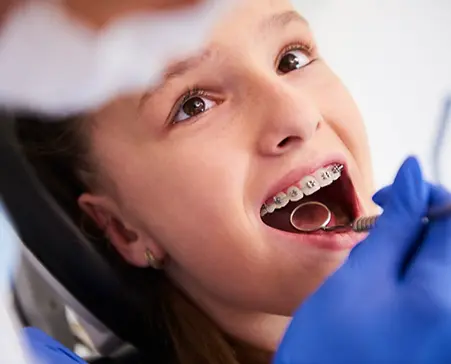
Mini Miners Pediatric Dentistry provides Phase 1 orthodontics for kids in Westminster, CO from our office in Erie, about 20 minutes away. Phase 1 is early treatment for ages 6 to 10, while baby teeth and adult teeth share the mouth. Your child's braces, Invisalign or removable appliance is managed by the same team that already knows their teeth, their temperament and their anxiety triggers.
A check at 7 doesn't mean treatment at 7. The calendar below sorts the common Phase 1 problems into treat now or watch. One of them, a molar caught under a baby tooth, corrects itself by age 9 in 71% of cases.
What Is Phase 1 Orthodontics?
Phase 1 orthodontics is early treatment aimed at 1 specific bite or space problem, started while your child still has a mix of baby and permanent teeth. It usually starts between ages 6 and 10 and runs 9 to 18 months. Phase 2 is a full course of braces or aligners in the teen years, if your child needs one.
The American Association of Orthodontists recommends an orthodontic evaluation by age 7. That's a look, not a start date. During regular checkups at Mini Miners, Dr. Grover watches growth and development and talks options through with you when something on the calendar below appears. If the teeth are coming in normally, the plan is to wait and keep watching.
The 6-to-10 Bite Calendar

At Mini Miners Pediatric Dentistry, Dr. Grover screens for orthodontic problems during your child's regular checkups, so there's no separate referral. Each problem below gets 1 of 2 verdicts, treat now or watch, based on the American Academy of Pediatric Dentistry's 2024 guideline on the developing dentition. The ages follow the eruption timeline in the Victorian Government's Better Health Channel guide to your child's dental development.
The calendar at a glance:
Ages 6 to 7, an upper first molar caught under a baby molar: watch. 71% correct themselves by age 9.
Ages 7 to 8, a front crossbite or a back crossbite that shifts the jaw: treat now.
Ages 8 to 9, mild crowding: watch. The leeway space that opens between 9 and 12 often solves it.
Ages 8 to 9, severe crowding or a baby molar lost early to decay: treat now, to make or hold space.
Ages 9 to 10, a canine bump that can't be felt, confirmed on X-ray: treat now by removing the baby canine.
Any age, a thumb, pacifier or tongue habit that's moving teeth: treat now, habit first and appliance second.
Ages 6 to 7: the first permanent molars
First permanent molars come in between 6 and 7. In up to 3% of children, an upper one catches under the back edge of the baby molar in front of it. That's called ectopic eruption, and the AAPD guideline reports that 71% correct themselves by age 9. So the usual first step is to watch it at checkups. If the molar stays locked, it can damage the baby molar it's pressing on, and that's when it gets treated.
Ages 7 to 8: the front teeth
The front teeth come in between 6 and 8. If an upper one lands behind the lower ones, AAPD says a simple crossbite can be aligned as soon as it's noticed, provided there's room. A randomized trial of 62 children, published in the European Journal of Orthodontics in 2015, tested 2 options Mini Miners offers: a removable appliance and braces on only the teeth that need moving. Every fixed case corrected, and all but 1 removable case did. Braces took 5.5 months on average and the removable appliance 6.9. Over the next 2 years, 3 children relapsed.
A back crossbite that makes the jaw slide sideways to close is also a treat-now. AAPD says a shift like that should be corrected as soon as possible, to head off jaw joint problems and uneven growth.
Ages 8 to 9: crowding and space
Crowded teeth are harder to clean, which increases cavity risk. Mild crowding at 8 often has a later answer. Baby molars are wider than the premolars that replace them, and that extra room, called leeway space, opens up as the baby molars fall out between about 9 and 12. The AAPD guideline reports that when a passive lingual arch holds that space and the arch gains 2 mm, all the permanent teeth fit in about 9 of 10 patients.
A baby molar lost early to decay is different. Neighboring teeth drift into the gap, and a space maintainer holds it open. Severe crowding also gets attention sooner, because an adult tooth with no room can end up impacted.
Ages 9 to 10: the canines
Canines come in between 9 and 13. Before an upper canine arrives, you can usually feel it as a bump in the gum above the baby canine. AAPD says to suspect an impacted canine when that bump can't be felt, and to remove the baby canine when an X-ray also shows the adult canine overlapping the root of the tooth beside it.
The research behind that step is thin. A 2021 Cochrane review found 4 trials with 199 children. After the baby canine came out, 39% of the displaced canines erupted within 12 months, against 14% when it stayed. The certainty is very low, and pulling the baby tooth didn't lower surgical referrals at 12 months. It's a small first step with no guarantee, and you should hear that before it's scheduled.
Any age: thumb, pacifier and tongue habits
Thumb sucking, a pacifier past the toddler years and tongue thrusting can push teeth out of line. The AAPD guideline cites a goal of ending sucking habits by 36 months. When a habit outlasts that and is already moving teeth, an appliance can help, once approaches at home have had a fair try.

Our Treatment Options
Mini Miners Pediatric Dentistry offers three orthodontic treatment approaches for Westminster children, and Dr. Grover recommends the one that best fits your child's specific condition, age, and comfort level.
Invisalign for Kids. Clear removable aligners designed for younger patients. Invisalign can be removed for eating, brushing, and flossing, which means no food restrictions and easier hygiene. There are fewer emergency visits for broken brackets or wires. For active kids and young athletes, Invisalign eliminates the risk of mouth injuries from metal brackets during sports. Aligners are changed every one to two weeks as teeth gradually shift into the correct position.
Removable Appliances. For certain conditions like a simple crossbite, a removable appliance may be all that's needed. These devices can be taken out for eating and brushing, making them more comfortable and convenient for younger children.
Traditional Braces. Kid-friendly braces designed specifically for younger patients. Phase 1 braces are often placed on just a few teeth rather than a full set, targeting the specific issues that need correction. This focused approach means shorter treatment time and less hardware in your child's mouth.
After Phase 1. A retainer holds the result. During the resting period that follows, the last baby teeth fall out and Dr. Grover keeps watching at the checkups you already have, because your child's orthodontic team and dental team are the same people in the same office.
Comfort During Orthodontic Treatment
Getting braces doesn't have to be stressful, and at Mini Miners Pediatric Dentistry, we use the same comfort techniques for orthodontics for kids in Westminster, CO that we use for every other procedure.
Nitrous oxide during installation
For children who are anxious about having braces placed, we offer laughing gas to help them stay relaxed throughout the appointment. This is something most dedicated orthodontic offices don't provide.
Sensory-sensitive accommodations
Children with sensory processing differences or special needs receive individualized approaches. We move at the child's pace, use our No Scary Words policy, and adjust the environment as needed.
Child-friendly explanations
Dr. Grover explains what's happening in language children understand, shows them the appliances before placing them, and answers their questions directly.
Positive reinforcement
Every orthodontic visit ends with recognition and a prize. Building positive associations with orthodontic care means better compliance with wearing aligners, maintaining appliances, and keeping follow-up appointments. Children who feel good about their treatment tend to take better care of their braces and appliances between visits.
Frequently Asked Questions
When should my child first be evaluated for orthodontics?
The American Association of Orthodontists recommends an initial orthodontic evaluation by age seven. At Mini Miners Pediatric Dentistry, Dr. Grover monitors your child's dental development at every regular checkup and will let you know if an orthodontic evaluation is warranted. Age seven is when most children have enough permanent teeth for a specialist to identify potential alignment, spacing, and bite issues that may benefit from early treatment.
What is the difference between Phase 1 and Phase 2 orthodontics?
Phase 1 orthodontics is early intervention treatment that occurs between ages six and ten while children still have a mix of baby and permanent teeth. It addresses specific issues like crossbites, severe crowding, and jaw growth problems. Phase 2 is comprehensive orthodontic treatment that typically happens in the teen years after all permanent teeth have erupted. Phase 1 doesn't always eliminate the need for Phase 2, but it often makes Phase 2 shorter and less complex.
Will my child still need braces as a teenager after Phase 1?
Many children who receive Phase 1 treatment will still need some orthodontic work as teenagers, but it's typically shorter and less involved than it would have been without early intervention. Some children may not need Phase 2 treatment at all. Dr. Grover will monitor your child's development throughout Phase 1 and after treatment ends, giving you a clear picture of what to expect as permanent teeth continue to come in.
Is Phase 1 orthodontic treatment painful?
Most children experience minimal discomfort with Phase 1 appliances. Any soreness is typically mild and temporary, lasting a few days after initial placement or adjustments. For children who are anxious about the process, Mini Miners Pediatric Dentistry offers nitrous oxide (laughing gas) during braces installation and adjustment appointments to help them stay relaxed. Over-the-counter children's pain relief can manage any residual soreness at home. Most kids adjust quickly and don't report ongoing discomfort between visits.
How long does Phase 1 orthodontic treatment take?
Treatment length varies based on the specific issues being addressed, but Phase 1 treatment typically ranges from 9 to 18 months. Dr. Grover will give you an estimated timeline at the beginning of treatment based on your child's specific condition and goals. Regular follow-up appointments, usually every four to eight weeks, allow us to monitor progress and make adjustments. After active treatment ends, a retainer phase helps maintain the results.
Why get orthodontics from a pediatric dentist instead of an orthodontist?
The advantage is continuity and convenience. At Mini Miners Pediatric Dentistry, your child's orthodontic care is managed by the same team that handles their cleanings, fillings, and all other dental needs. Dr. Grover already knows your child's full dental history, anxiety level, and temperament. There's no referral to a separate office, no new team to meet, and no coordinating schedules between two practices. For anxious or special needs children, staying in a familiar environment with familiar faces makes a significant difference.
Does Invisalign work for young children?
Yes. Invisalign now offers aligners specifically designed for younger patients. Invisalign for kids can address many of the same conditions as traditional braces, including crowding, spacing, and certain bite issues. The aligners are removable, which means easier brushing, no food restrictions, and fewer emergency visits. Dr. Grover evaluates whether Invisalign is appropriate based on your child's specific condition and their ability to wear the aligners consistently.


Monday 8 AM–5 PM
Tuesday 8 AM–5 PM
Wednesday 8 AM-5 PM
Thursday 8 AM–5 PM
Friday 8 AM–3:30 PM
Saturday Closed
Sunday Closed

Copyright © 2025 Mini Miners Pediatric Dentistry. All rights reserved.
Mini Miners Pediatric Dentistry
61 Erie Pkwy, Unit 101
Erie, CO 80516
Phone: (303) 500-3202
Text: (720) 734-5890
Email: MiniMinersPD@gmail.com
Fax: (303) 552-3700
Contact Us
Billing & Insurance
Dental Membership
New Patient
Healthy Teeth Guide
Office Tour