When Do Baby Teeth Fall Out? A Parent's Guide For 2026
Most kids lose their first baby tooth around age 6. The bottom two front teeth almost always go first, followed by the top two. By age 12 or 13, the full set of 20 baby teeth is usually gone and replaced by permanent adult teeth. That's the short answer. But the timing varies more than most parents expect, and what happens when things don't follow the standard schedule matters a lot more than people realize.
Baby teeth fall out when the roots slowly dissolve as the permanent tooth underneath pushes upward. This process, called exfoliation, follows a predictable order for most children. When it goes smoothly, you barely need to think about it. When it doesn't, catching the problem early saves you from much bigger (and more expensive) issues down the road.

What Age Do Kids Start Losing Baby Teeth?
The typical range is 5 to 7 years old. Most children notice their first loose tooth right around their sixth birthday. Girls tend to lose teeth a few months earlier than boys, on average.
That said, I've seen perfectly healthy kids who didn't lose a tooth until nearly 8. A one-year variation in either direction is normal. The bigger concern isn't whether your child is slightly ahead or behind. It's whether the permanent teeth are actually forming underneath. A simple X-ray during a routine cleaning and exam can confirm that everything is developing on schedule.
One detail that gets overlooked: kids have 20 baby teeth, but they'll end up with 28 to 32 permanent teeth (depending on wisdom teeth). Some of those permanent molars, specifically the first set around age 6, come in behind the baby teeth without replacing anything. Parents sometimes mistake these for a problem when they're completely normal.
Baby Teeth Loss Timeline by Age
Here's the age-by-age breakdown based on the ADA eruption charts and the AAPD 2025–2026 Reference Manual:
Tooth Type | Typical Age Range |
Lower central incisors (bottom front) | 6–7 years |
Upper central incisors (top front) | 6–7 years |
Lateral incisors (next to front teeth) | 7–8 years |
Canines (pointed teeth) | 9–12 years |
First molars | 9–11 years |
Second molars | 10–12 years |
Teeth tend to fall out in roughly the same order they came in. Lower teeth usually beat the upper ones by a few months. And here's something worth knowing: the back molars (the last to go) can hang on until age 12 or even 13. So if your 11-year-old still has baby molars, that's not a red flag by itself.
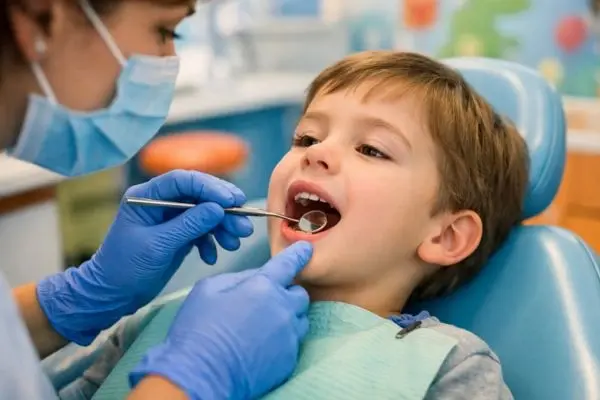
Baby Teeth Aren't Disposable
This is the biggest myth in pediatric dentistry, and it costs families real money. The "they're just baby teeth, they'll AAPD's 2025–2026 clinical guidelines are clear on this: untreated decay in baby teeth triples the risk of cavities in the permanent teeth growing underneath.
The CDC's 2024 Oral Health Surveillance Report found that 18% of U.S. children ages 6 to 8 had untreated decay in their primary teeth. In high-poverty households, that number jumped to nearly 25%.
Baby teeth do more than hold a spot. They guide permanent teeth into proper alignment, support jaw development, and help kids speak and eat normally. When a baby tooth is lost too early from early childhood tooth decay or trauma, the surrounding teeth drift into the gap. That drift can mean years of orthodontic work later.
I've seen cases where a single untreated cavity in a baby molar turned into an abscess that required hospital treatment under general anesthesia. The AAPD estimates those cases run $10,000 to $25,000 per child. A $150 filling would have prevented the whole thing.

What Causes Early Tooth Loss in Children?
"Early" means losing a tooth before age 4 or 5 without an obvious permanent tooth ready to replace it. The most common causes are:
Trauma. Falls, playground collisions, and sports injuries are the number-one reason kids lose baby teeth ahead of schedule. If your child knocks out a tooth, contact a pediatric emergency dentist right away.
Severe decay. Cavities that go untreated long enough can destroy the tooth structure entirely.
Gum disease. Less common in kids, but it happens, especially with poor brushing habits.
When a baby tooth comes out too soon, a pediatric dentist may recommend a space maintainer. It's a small device that holds the gap open so the permanent tooth can come in straight. They typically cost between $210 and $500. Compare that to the cost of braces or orthodontic treatment later, and the math is obvious.
Late Baby Tooth Loss and When to Act
If your child still has all their baby teeth past age 7 or 8, it's worth getting an X-ray. Most of the time, development is just running a little slow. But occasionally, late tooth loss signals something that needs attention:
The permanent tooth is missing entirely (congenitally absent). This happens in roughly 2–8% of kids, depending on the tooth.
The permanent tooth is stuck (impacted) and can't push through.
Extra teeth are blocking the path.
A panoramic X-ray shows exactly what's going on beneath the gums. Your child's pediatric dentist can assess tooth eruption patterns and catch these issues before they snowball.
Here's a question parents almost never ask but should: "Has my child's permanent tooth bud been checked on X-ray?" If your dentist hasn't brought it up by age 7, ask.

What Are Shark Teeth and Do They Need Treatment?
"Shark teeth" is the nickname for when a permanent tooth grows in behind the baby tooth before it falls out, creating a double row. It looks alarming, but it's one of the most common things we see in pediatric dentistry.
In most cases, the baby tooth loosens on its own within a few weeks once the permanent tooth puts pressure on its root. If the baby tooth stays stubbornly in place for more than two or three weeks, a quick extraction solves the problem. The permanent tooth typically shifts forward into the correct position on its own after that.
Don't panic if you see shark teeth. Do schedule a visit if the baby tooth shows no signs of loosening after a couple of weeks.

How to Handle a Loose Tooth at Home
A loose baby tooth usually doesn't need any help. The less you do, the better. Here's what actually works:
Let the tooth come out on its own. Encourage your child to wiggle it gently with their tongue, but avoid yanking or twisting. Pulling a tooth before it's ready can break the root and cause unnecessary pain.
When the tooth does fall out, expect a little bleeding. Have your child rinse with water or bite on a damp piece of gauze. Bleeding that lasts more than 30 minutes is a reason to call your dentist.
Keep brushing. Some kids avoid the area around a loose tooth because it feels weird. Gentle brushing with a soft toothbrush keeps the gum tissue healthy and reduces infection risk.
Skip the string-and-doorknob routine. Seriously. It makes for a funny video, but it's a bad idea. A tooth that isn't ready to come out can crack, and the broken root piece left behind will need professional removal.
For kids who feel anxious about loose teeth, just normalize the experience. Every kid goes through it. The Tooth Fairy doesn't hurt as a motivator, either.
Your child's baby teeth are only around for a short time, but they set the stage for everything that comes after. Staying on schedule with preventive dental care and knowing what to watch for gives your child the best shot at a healthy smile well into adulthood. If something looks off, or if you just want confirmation that your child's tooth loss is tracking normally, an experienced dental team that understands pediatric development can give you a clear answer fast.
Conclusion
Losing baby teeth is a normal part of growing up, but it's not something to leave entirely to chance. Knowing the typical timeline, first teeth around age 6, the last molars by 12 or 13, helps you spot when something's off before it becomes a bigger issue. Whether it's an early loss that needs a space maintainer, a stubborn baby tooth creating shark teeth, or a permanent tooth that hasn't shown up on schedule, most problems are straightforward to fix when you catch them early. The key takeaway is simple: don't dismiss baby teeth as temporary placeholders. They're actively shaping your child's dental future. Stay consistent with checkups, ask about X-rays by age 7, and trust your instincts if something doesn't look right. Your child's smile is worth the attention.
Frequently Asked Questions
Is it normal for a 7-year-old to still have all their baby teeth?
Yes. While most kids lose their first tooth around age 6, a delay of up to a year is within the normal range. Girls often lose teeth earlier than boys. If your child hasn't lost any teeth by age 8, schedule an X-ray to confirm the permanent teeth are developing properly underneath.
Do baby teeth really need fillings if they're going to fall out?
They do. The AAPD reports that untreated decay in baby teeth triples the odds of cavities forming in permanent teeth. Ignoring a cavity in a baby molar can lead to infections, abscesses, and hospital visits costing $10,000 or more. A simple filling now prevents much larger problems later.
What happens if a baby tooth falls out too early?
When a baby tooth is lost before age 5 from decay or injury, the teeth on either side can shift into the empty space. This blocks the permanent tooth from coming in correctly. A pediatric dentist may place a space maintainer (typically $210–$500) to hold the gap open until the permanent tooth is ready.
How much does it cost to pull a baby tooth?
A simple baby tooth extraction runs between $75 and $300 as of 2025. Costs increase if sedation is needed. Most dental insurance plans and Medicaid/CHIP cover pediatric extractions, so check your benefits before your visit.
What are shark teeth, and should I worry about them?
Shark teeth happen when a permanent tooth erupts behind the baby tooth, creating a double row. This is common and usually resolves on its own within a few weeks. If the baby tooth doesn't loosen after two to three weeks, a quick extraction corrects the issue.
Is pain or swelling normal when baby teeth fall out?
Mild discomfort and light bleeding are normal. Swelling, pus, or pain that lasts more than a day is not. Those symptoms could signal an infection and require a prompt dental visit.
Will my child's face look different after losing baby teeth?
The "gappy" look during the mixed dentition phase (roughly ages 6 to 12) is completely normal. Permanent teeth are larger than baby teeth and gradually fill in the spaces. Your child's face will change as their jaw grows to accommodate the bigger teeth.


Comments