How To Prepare Your Child For Their First Dental Visit
Updated: Oct 6
Schedule your child's first dental appointment by age one, and prepare them using proven strategies that reduce anxiety and build positive associations with dental care. At Mini Miners Pediatric Dentistry, we understand that parental attitude directly influences children's comfort levels, so maintaining positivity is crucial for success.
Key Takeaways:
Choose a pediatric dentist - Specialists use child psychology techniques like the tell-show-do method to explain procedures before demonstrating them
Tour the office beforehand - Familiarizing your child with the environment, staff, and treatment areas significantly reduces anxiety about the unknown
Time your announcement strategically - Tell them the morning of the appointment, not weeks in advance, to minimize worry without causing last-minute distress
Use educational preparation - Read dental-themed books, watch videos with favorite characters, and play pretend dentist at home by counting their teeth
Avoid fear-triggering words - Never mention "drill," "pain," "shot," "needle," or "hurt" when discussing dental visits
Schedule wisely - Book appointments after naps and meals when children are well-rested and fed for better cooperation
Bring comfort items - Pack favorite stuffed animals or toys to provide security during the visit
Model calm behavior - Your anxiety transfers directly to your child, so demonstrate positive energy and take deep breaths
Early positive dental experiences create healthy attitudes toward oral care that last a lifetime.

Preparing Children for Their Initial Dental Appointment
Pediatric dentistry experts recommend scheduling a child's first dental visit by age one. Early appointments ensure healthy tooth development and proper oral growth patterns. These initial visits help children build comfort and familiarity with dental care settings. According to the American Dental Association, regular dental visits become easier when children start young and develop positive associations early.
Many children feel anxious about their first dental appointment, which is completely normal. Adults often experience similar nervousness when visiting dental professionals for routine care. Most childhood dental anxiety stems from unfamiliarity with the dental environment and procedures. Parents can take specific steps to reduce their child's worries effectively.
Strategies for a Successful First Appointment
Creating a positive first dental visit requires thoughtful preparation and planning from parents. The following strategies help establish a foundation for lifelong healthy dental habits. These proven approaches reduce anxiety and build your child's confidence before the appointment. Implementing these steps ensures your child's first dental visit becomes a pleasant experience.
Maintain a Positive Attitude
Research shows that parental anxiety about dental care transfers directly to children.
Keep conversations about dental visits upbeat and encouraging at all times. Avoid discussing negative dental experiences or upcoming procedures around your child. Model calm behavior during appointments by taking deep breaths and smiling. Your positive energy helps children feel safe and secure during visits. Children observe and mirror their parents' emotional responses to new situations.
Choose Specialized Pediatric Dental Care
Pediatric dentistry differs significantly from general dental practice in important ways. Pediatric dentists complete additional specialized training after graduating from dental school. This training covers child development, psychology, and age-appropriate treatment techniques for growing mouths. Our team of experienced pediatric dentists uses the tell-show-do method to describe procedures before demonstrating them to reduce anxiety. This approach helps children understand what to expect during each appointment. Specialized pediatric practices create welcoming environments designed specifically for young patients.
Visit the Office Before the Appointment
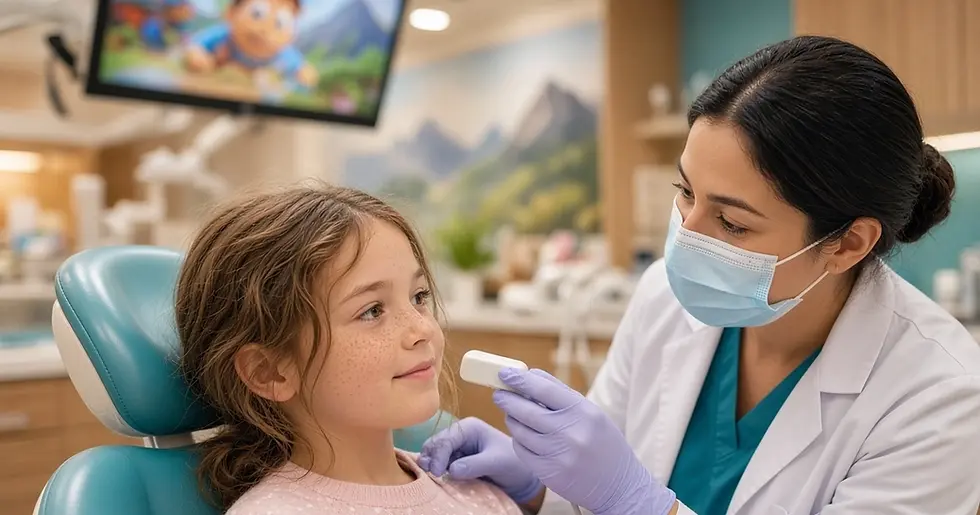
Schedule a tour of the dental office before your child's first visit. Modern pediatric dental offices feature child-friendly decor and entertainment options throughout. Treatment rooms often include themed designs that make children feel comfortable. Many offices provide game rooms, toys, books, and digital entertainment options. These amenities transform dental visits into positive experiences children actually enjoy. Familiar surroundings help reduce anxiety and build excitement for future appointments. When children look forward to dental visits, maintaining good oral health for children becomes natural.

How Parents Can Ease Their Child Into That First Dental Visit
Scheduling your child's first dental visit marks an important milestone in their health journey. Making this experience positive sets the foundation for a lifetime of good oral health habits. Here are proven strategies to help your child feel comfortable and confident about visiting the dentist.
Tour the Office Before the Appointment
Consider visiting the dental office before the scheduled appointment to familiarize your child with the environment. This advance tour helps children become comfortable with the sights and sounds they'll encounter. Many pediatric dentistry practices welcome families to stop by for a quick visit beforehand. Your child can see the friendly staff and explore the treatment areas. This simple step significantly reduces anxiety about the unknown.
Time Your Announcement Carefully
Telling your child about their dental visit requires strategic timing to minimize worry. Avoid mentioning the appointment weeks in advance, as this creates unnecessary anxiety for young children. However, surprising them at the last minute can also cause distress and resistance. The morning of the appointment works best for most families. Explain that a friendly tooth doctor will count their teeth and teach them about keeping smiles healthy. Answer their questions honestly but keep explanations simple and positive. Avoid using words that trigger fear like "drill," "pain," "shot," "needle," or "hurt."
Use Books and Videos as Teaching Tools
Children learn best through stories and characters they love and trust. Reading books or watching videos about dental visits makes the experience feel familiar and fun. The CDC provides helpful resources for teaching children about oral health. When favorite characters happily visit the dentist, children associate positive feelings with the experience. This preparation method helps your child understand what to expect during their appointment.
Play Pretend Dentist at Home
Role-playing games effectively prepare children for new experiences like dental visits. Playing dentist at home demystifies the appointment and builds confidence. Here's how to make it fun:
Have your child sit in a chair while you gently count their teeth
Use their toothbrush to demonstrate proper brushing techniques
Explain what you're doing and why healthy teeth matter
Switch roles and let them be the dentist for a stuffed animal
Keep the game light, fun, and educational
Choose the Right Appointment Time
Selecting an optimal appointment time prevents meltdowns and promotes cooperation during the visit. Schedule the dental visit when your child typically feels their best. After a nap and meal usually works well for most children. Hungry or tired children struggle with new situations and may not cooperate as easily. Consider your child's daily routine when booking their appointment.
Offer Praise and Positive Reinforcement
Fear of the dentist is completely normal, especially for first-time visitors. Acknowledge your child's feelings and praise their bravery for trying something new. Pediatric dental professionals understand that some children may cry or resist during their visit. This behavior is typical and improves with each subsequent appointment. Focus on what went well rather than dwelling on difficulties. Celebrate small victories and discuss strategies together for making the next visit even better.
Bring Comfort Items from Home
A favorite stuffed animal or toy provides security during the dental visit. Familiar objects help children feel safe in new environments. Pack your child's beloved comfort item before heading to the appointment. Many dental offices also offer comfort buddies that children can hold during their visit. For children with additional needs, specialized care approaches make a significant difference in their comfort level.
Making Dental Visits a Positive Experience
Preparing your child for their first dental visit sets the stage for lifelong oral health. Using these practical strategies helps children feel confident and ready for the experience. Children's Hospital emphasizes that early positive experiences with pediatric dentistry create healthy attitudes toward dental care. Remember that building comfort takes time, and each visit becomes progressively easier. Your supportive presence and positive attitude make all the difference in your child's dental journey. For comprehensive educational resources, parents can access materials that support their child's oral health journey. Start creating positive dental experiences today by scheduling your child's first appointment with a qualified pediatric dentist.
Conclusion
Preparing your child for their first dental visit is an investment in their lifelong oral health. By choosing a pediatric dentist, touring the office beforehand, and maintaining a positive attitude, you create a foundation for stress-free dental experiences. Strategic timing of your announcement, educational preparation through books and play, and careful scheduling around your child's routine all contribute to success. KidsHealth and the American SPCC provide additional guidance on children's dental health. Remember that your emotional state directly influences your child's comfort level, so approach the visit with confidence and enthusiasm. While some nervousness is natural, these proven strategies significantly reduce anxiety and build positive associations with dental care. If an emergency situation arises, know that pediatric dental offices are equipped to handle urgent care needs. With proper preparation and your supportive presence, your child's first dental visit can become a pleasant milestone that sets the stage for healthy habits lasting well into adulthood.
FAQs
When should I schedule my child's first dental appointment?
Schedule your child's first dental visit by their first birthday or within six months of their first tooth appearing. Early appointments allow the dentist to monitor tooth development, identify potential issues, and establish preventive care routines. Starting young helps children become comfortable with dental visits before anxiety develops.
How far in advance should I tell my child about the dentist appointment?
Tell your child the morning of the appointment rather than weeks in advance. Young children don't have a developed sense of time, and advanced notice creates unnecessary worry. However, avoid surprising them at the last minute, as this can cause distress. Morning-of notification provides enough time to answer questions without prolonged anxiety.
What words should I avoid when discussing dental visits?
Never use fear-triggering words like "drill," "pain," "shot," "needle," "hurt," or "pull." Instead, use positive language like "count your teeth," "make your smile sparkle," or "check your teeth." Let the dental professionals introduce any necessary terminology using child-friendly explanations appropriate for your child's age.
What should I bring to my child's first dental appointment?
Bring your child's favorite comfort item such as a stuffed animal or toy to provide security. Also pack any necessary insurance information, medical history records, and a list of current medications. Consider bringing a change of clothes if your child is prone to accidents when nervous.
Is it normal for my child to cry during their first dental visit?
Yes, crying or resistance during the first dental visit is completely normal and expected. Pediatric dentists are trained to work with anxious children and understand that behavior improves with each subsequent visit. Focus on praising your child's bravery and celebrating what went well rather than any difficulties encountered.


Comments