Best Drinks For Kids' Teeth: Age-by-Age Limits For Erie Families
Written By: Logan Grover, Content Writer |
Reviewed By: Dr. Alison Grover, Board-Certified Diplomate Pediatric Dentist |
Last Reviewed: October 7, 2026 |
The best drinks for kids' teeth are plain tap water and plain milk. Everything else, from 100% juice to flavored sparkling water to sports drinks, adds sugar, acid, or both, so it needs a limit. Erie families start ahead here. The town has added fluoride to its water since October 27, 2008, and its latest water quality report lists 0.82 ppm.
The bigger change in 2026 is the sugar rule. The 2025-2030 Dietary Guidelines for Americans, released in January, recommend no added sugar at all for kids through age 10. CDC data show US kids ages 2 to 19 averaged 17 teaspoons of added sugar a day in 2017-2018. That's a long way from zero.

What Are the Best Drinks for Kids' Teeth?
Plain fluoridated tap water is the best drink for kids' teeth, and plain milk with meals is the other everyday choice. The American Academy of Pediatric Dentistry's 2026 nutrition policy names fluoridated water the preferred drink for children and teens. Juice, flavored milk, flavored sparkling water, sports drinks, and soda each add sugar, acid, or both.
It's the same advice Mini Miners gives Erie families: water as the main drink between meals, and milk or water with meals. The table shows what each common drink adds and what the guidance says about it.
Drink | What it adds | What the guidance says |
Erie tap water | Fluoride, 0.82 ppm | AAPD: the preferred drink for kids |
Plain milk | Calcium, natural milk sugar | Joint drink guidance: daily amounts from age 1 to 5 |
100% juice | Natural sugar and acid | AAP: none before age 1, then 4 to 8 oz max by age |
Flavored sparkling water | Acid, pH 2.74 to 3.34 in 1 lab study | Study authors: treat as potentially erosive |
Flavored milk | Added sugar | 2026 Dietary Guidelines: no added sugar through age 10 |
Sports drinks | Sugar and acid, most at pH 3 to 4 | AAP: generally unnecessary for routine activity |
Soda | Added sugar and acid | 2026 Dietary Guidelines: no added sugar through age 10 |
Energy drinks | Caffeine and acid | AAP: should never be consumed by kids or teens |

Drink Limits by Age
Kids 10 and under should get no added sugar, and juice limits run from none before age 1 to 8 oz a day for older kids. The juice numbers come from the American Academy of Pediatrics' 2017 juice policy.
Age | 100% juice, max a day | Added sugar | Sports and energy drinks |
Under 12 months | None | Avoid | No |
1 to 3 years | 4 oz | Avoid | No |
4 years | 4 to 6 oz | Avoid | No |
5 to 6 years | 4 to 6 oz | None recommended | Water for routine activity. Energy drinks never. |
7 to 10 years | 8 oz | None recommended | Water for routine activity. Energy drinks never. |
11 to 18 years | 8 oz | None recommended, and no more than 10 g in a meal | Water for routine activity. Energy drinks never. |
Sources: AAP 2017 juice policy, 2025-2030 Dietary Guidelines for Americans, AAP 2011 clinical report on sports and energy drinks, and joint drink guidance for ages 0 to 5 from the AAP, AAPD, American Heart Association, and Academy of Nutrition and Dietetics.
For kids 5 and under, that joint guidance adds daily water and milk targets. Babies under 6 months need only breast milk or formula. From 6 to 12 months, add 4 to 8 oz of water a day. From 12 to 24 months, it's 8 to 32 oz of water plus 16 oz of plain whole milk. From 2 to 5 years, it's 8 to 40 oz of water plus 16 to 24 oz of plain nonfat or low-fat milk.
Older kids don't get joint ounce targets, so water stays the default.
You'll still see other sugar numbers online. The American Heart Association's 2016 statement caps added sugar at 25 g a day for ages 2 to 18. AAPD's 2026 policy uses a different yardstick: sugar under 5% of daily calories. The federal line of zero is the strictest of the 3 for kids 10 and under.

Is Erie's Tap Water Fluoridated?
Yes. Erie voters approved Ballot Question 2A on April 1, 2008, and the town started adding fluoride on October 27, 2008.
Erie's water starts in Carter Lake, part of the Colorado-Big Thompson Project, and gets treated at the Lynn R. Morgan Water Treatment Facility in town. The town's 2025 water quality report lists fluoride at 0.82 ppm in its most recent sample, taken in 2023. CDC's recommended level for community water is 0.7 mg/L, and in drinking water, 1 ppm equals 1 mg/L.
Fluoride in drinking water has been in the national news since 2025. As of its 2026 policy, AAPD still names fluoridated water the preferred drink for kids and teens.
If your home uses well water or bottled water, ask at the next visit if your child gets enough fluoride. Cleanings at Mini Miners include a fluoride varnish coat in a flavor your child picks.

How Much Juice Is Too Much?
For kids 1 to 3, anything over 4 oz a day. For ages 4 to 6, the American Academy of Pediatrics allows 4 to 6 oz a day, and for ages 7 to 18, 8 oz. Before age 1, the answer is none.
100% juice still carries the fruit's sugar and acid, minus the fiber in whole fruit. The 2025-2030 Dietary Guidelines say 100% juice "should be consumed in limited portions or diluted with water."
How a child drinks it matters too. The AAPD's policy on early childhood cavities is blunt: "avoidance of frequent consumption of sugar-containing liquids and/or solid foods." Mini Miners gives families the same advice: limit juice and sugary drinks, and don't let kids sip on them throughout the day. Juice also makes our list of foods that cause cavities in kids.

Milk, Flavored Milk, and the Bedtime Cup
Plain milk is a good drink for teeth when it comes with meals. Flavored milk adds sugar, and milk of any kind in a bedtime bottle is a decay risk.
Plain milk brings calcium. The ADA also lists a glass of milk or a piece of cheese as ways to help teeth after acidic food or drinks. Flavored milk is a different drink. Chocolate and strawberry milk carry added sugar, which puts them outside the 2026 federal line for kids 10 and under. The joint drink guidance for kids 5 and under puts flavored milk on its avoid list.
Bedtime is where milk causes trouble. Mini Miners tells families never to put a baby to bed with a bottle of milk, formula, juice, or sugary drinks. If a bottle has to go to bed, fill it with water only. Breast milk left on teeth all night may lead to decay, the same as regular milk.
The practice also recommends weaning from the bottle between 12 and 14 months. The AAPD's caries policy lists avoidance of "on-demand or nocturnal" bottle feeding past 12 months as a prevention step. If decay has already started, Mini Miners treats early childhood tooth decay at the Erie office.

What the AAP Says About Sports Drinks After Practice
Most kids' practices don't call for a sports drink. A 2011 clinical report from the American Academy of Pediatrics backs that up. It calls sports drinks in place of water "generally unnecessary" for "the average child engaged in routine physical activity."
A sports drink works against teeth in 2 ways. That AAP clinical report puts most sports and energy drinks at pH 3 to 4, a level "associated with enamel demineralization." The brands it reviewed carried 2 to 19 g of carbohydrate per 8 oz serving.
AAP does see a place for them during "prolonged, vigorous sports participation" or in "excessively hot or humid conditions." That's when a child needs carbs and electrolytes back fast. For most exercise, AAP says water is "generally the appropriate first choice for hydration."
Energy drinks are a separate category. AAP says they "are not appropriate for children and adolescents and should never be consumed."
When a sports drink does come out, Mini Miners' advice for any sugary drink applies: don't let it turn into sipping throughout the day.

Is Sparkling Water Safer Than Soda?
Unsweetened sparkling water has no sugar, so it beats soda there. For acid, flavored sparkling water isn't the free pass it looks like.
A 2007 lab study tested flavored sparkling waters and found a pH of 2.74 to 3.34. In the lab, they were as erosive as orange juice or more. The authors, writing in the International Journal of Paediatric Dentistry, concluded these drinks should be treated as potentially erosive.
Soda brings both problems at once: added sugar and acid. Acid is the norm on store shelves, too. When researchers tested 379 US beverages for the Journal of the American Dental Association, 93% had a pH below 4.0, and 39% fell below 3.0.
If sparkling water replaces soda in your house, that cuts the sugar, though the acid stays.
How to Limit the Damage From a Sugary Drink
Keep sugary drinks with meals and follow them with water. Then wait an hour before brushing.
Pair it with food. Mini Miners' preventive care advice is to limit sugary snacks and drinks between meals, because frequent sugar exposure is a major cause of childhood cavities.
For acidic drinks, a straw helps. The ADA's tips on dietary acids add 2 more: don't swish it, and don't hold it in the mouth longer than needed.
Water, milk, or cheese afterward all help. They're on the ADA's list for after acidic foods and drinks.
Wait an hour to brush, not the 30 minutes some sites list. Acid softens enamel, and the ADA says that hour gives saliva time to wash acids away and re-harden it.
Acidic drinks deserve extra caution for kids who already have weak or chalky enamel.
Why 6-Month Checkups Catch Drink Damage Early
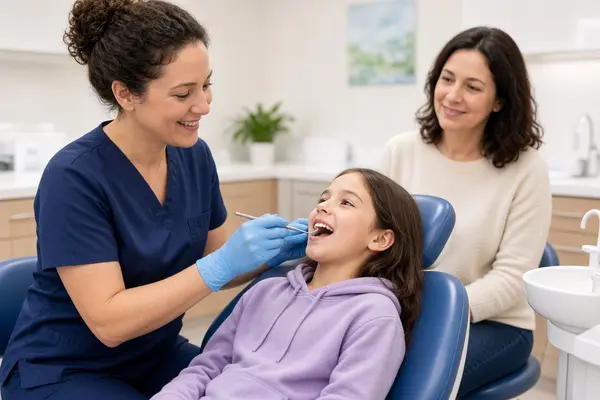
Drink habits show up on teeth slowly, which is why 6-month checkups catch them early. AAPD recommends dental visits every 6 months, starting at age 1 or when the first tooth appears.
In a study of baby teeth, decay took about 10 months, on average, to travel through the enamel to the dentin below it. The study ran in the Journal of Clinical Pediatric Dentistry. Its authors note the timing varies a lot from child to child.
Cavities are common. Per CDC, 50% of children ages 6 to 9 have had a cavity in their baby or permanent teeth. The AAPD asks dental teams to spot kids whose eating and drinking patterns raise their cavity risk. Sipping is 1 reason kids get cavities despite good brushing: a toothbrush can't undo a day of it.
Your child picks the fluoride flavor from a menu, and there's a flavorless option too. The varnish hardens quickly when it meets saliva, so kids can eat and drink normally right after the treatment. Standard varnish asks families to avoid hot, hard, or sticky food for 4 to 6 hours. That's a hard ask with a hungry toddler on the drive home.
The best drinks for kids' teeth haven't changed: tap water and plain milk. The 2026 rules make the case for them stronger. If your child has juice, sports drinks, or flavored milk most days, mention it at your next visit. Or call Mini Miners at (303) 500-3202 to book.
FAQs
What are the best drinks for kids' teeth?
Plain fluoridated tap water is the best everyday drink, and plain milk with meals is the other. The American Academy of Pediatric Dentistry's 2026 nutrition policy names fluoridated water the preferred drink for children and teens. Juice, flavored milk, flavored sparkling water, sports drinks, and soda all add sugar, acid, or both.
How much juice can a child have a day?
The American Academy of Pediatrics recommends no juice before age 1 and up to 4 oz a day for ages 1 to 3. Ages 4 to 6 can have 4 to 6 oz, and ages 7 to 18 up to 8 oz. Mini Miners also advises against letting kids sip juice or other sugary drinks throughout the day.
Are sports drinks bad for kids' teeth?
For routine activity, yes. The American Academy of Pediatrics says most sports drinks have a pH of 3 to 4, a level linked to weakened enamel. It calls them generally unnecessary for the average child and names water the first choice for most exercise.
Is Erie's tap water fluoridated?
Yes. Erie voters approved fluoridation on April 1, 2008, and the town started adding fluoride on October 27, 2008. The town's 2025 water quality report lists 0.82 ppm from its 2023 sample, compared with CDC's recommended level of 0.7 mg/L.
Is flavored sparkling water bad for kids' teeth?
It can be. A 2007 lab study in the International Journal of Paediatric Dentistry measured flavored sparkling waters at pH 2.74 to 3.34. In the lab, they were as erosive as orange juice or more. Unsweetened versions have no sugar, but the acid stays.
What are the best drinks for kids' teeth at bedtime?
Water only. Mini Miners advises never putting a baby to bed with a bottle of milk, formula, juice, or sugary drinks. If a bottle goes to bed, it should hold water only. The American Academy of Pediatric Dentistry also advises against on-demand or nighttime bottle feeding after 12 months.
Can my child eat or drink right after a fluoride treatment at Mini Miners?
Yes. The varnish Mini Miners uses hardens quickly when it meets saliva, so kids can eat and drink normally right after the treatment. Standard varnish asks families to avoid hot, hard, or sticky foods for 4 to 6 hours.


Comments