8 Common Procedures Performed By Pediatric Dentists
Updated: Oct 6
Pediatric dentists perform eight common procedures that protect children's oral health from infancy through adolescence. Professional teeth cleaning removes plaque buildup every six months to prevent decay in developing teeth. Fluoride applications strengthen enamel and reverse early signs of tooth damage before cavities form. Cavity fillings repair tooth decay quickly using safe materials that blend naturally with surrounding teeth. Dental crowns restore severely damaged teeth and maintain proper spacing for incoming adult teeth. Tooth extractions remove teeth damaged beyond repair while preventing alignment issues in remaining teeth. Early orthodontic correction using braces or aligners fixes bite problems and crowding during active jaw growth. Protective sealants shield the grooved chewing surfaces of back teeth, where the CDC reports 9 in 10 cavities occur. Emergency dental care treats knocked-out teeth, fractures, and severe toothaches requiring immediate professional attention.
Pediatric dentist procedures are the treatments a specialist trained in children's dentistry performs on baby and developing teeth. The 8 most common are cleanings, fluoride, fillings, crowns, extractions, early orthodontic correction, sealants, and emergency care. Each uses child-sized instruments and techniques suited to primary teeth, which have thinner enamel than adult teeth.
Children need specialized dental care because the enamel on a baby tooth is thinner than the enamel on an adult tooth, which gives decay less to chew through. Primary teeth hold space for permanent teeth and support proper speech development and chewing function. Pediatric dentists use child-sized tools and gentle techniques designed specifically for young patients' comfort. Regular dental visits every six months allow early detection of problems when treatment is simpler and less invasive. Understanding these common procedures helps parents make informed decisions about their child's oral healthcare needs.
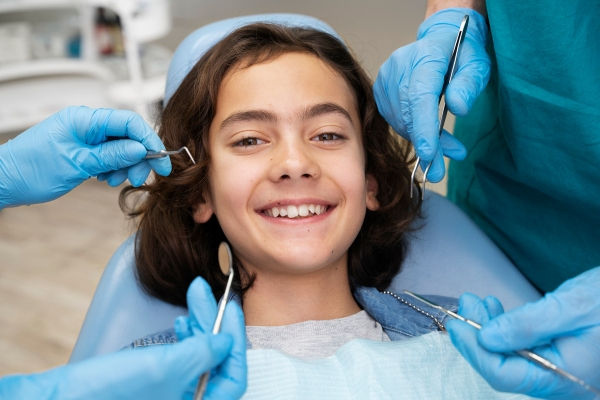
Pediatric Dentist Procedures Your Child May Need
Pediatric dentists provide specialized care designed for children's dental needs. From routine cleanings to emergency treatments, these professionals handle various procedures throughout childhood. Understanding what treatments your child might need helps you prepare for dental visits. It also reduces anxiety for both parents and children during appointments. Pediatric dentists use gentle techniques and child-friendly approaches for every procedure. Their training focuses on making dental care comfortable and workable for young patients.
Children face unique dental challenges as their teeth develop and grow. Baby teeth require proper care even though they eventually fall out naturally. Early dental problems can affect how adult teeth come in later. Regular visits to a pediatric dentist help prevent serious issues from developing. These specialists catch problems early when they are easier to treat. Preventive care and timely treatment protect your child's oral health for years. Knowing about common procedures helps you make informed decisions about dental care. The following treatments are among the most frequently performed by pediatric dentists.
Professional Teeth Cleaning
Professional teeth cleaning removes the plaque and tartar that brushing at home leaves behind, and it happens every six months for most children. The American Academy of Pediatric Dentistry sets that interval in its recommended dental periodicity schedule, which calls for a repeat examination every 6 months or as indicated by the child's risk. Baby teeth need the same care as adult teeth, even though they fall out. During the cleaning, the pediatric dentist removes plaque and tartar using specialized tools. These tools are made for smaller mouths, which is most of what keeps a cleaning comfortable.
Six months is not an arbitrary number. A retrospective study of 95 children published in the Journal of Clinical Pediatric Dentistry tracked how fast decay moves through a baby tooth and found that a lesion took about 0.8 years, roughly 10 months, to travel from the outer enamel to the dentin-enamel junction, then another 1.4 years to reach the inner dentin. The authors noted that this was faster than earlier research had reported. A six-month recall is built to catch a lesion while it is still shallow and cheap to fix, rather than after it has reached the nerve.
Here is what a cleaning looks like in our operatories. Your child picks the flavor of the prophy paste before we start, and a movie from a library of more than 70. When X-rays are needed, we take them right there in the treatment room with a handheld unit that works like a camera, so nobody gets moved and the movie never stops. The sensors are sized for a child's mouth, not an adult's, which is the difference between a two-year-old tolerating a film and a two-year-old refusing one.
X-rays help identify hidden problems between teeth and below the gum line.
Fluoride treatments strengthen enamel and provide extra protection against cavities.
Children consume more sugar than adults, which raises their risk for tooth decay.
Young patients often have less developed brushing and flossing habits than adults.
Regular cleanings and exams help prevent problems and monitor how adult teeth are growing in. These appointments also allow the pediatric dentist to spot any unusual development early. Preventive care during childhood establishes healthy habits that last a lifetime for your child. Early detection of issues means simpler and less invasive treatments later on. Professional cleanings remove buildup that regular brushing at home cannot eliminate completely. Routine appointments create positive experiences that reduce fear of dental visits in the future. Building this foundation early helps children maintain good oral health into their adult years.

Fluoride Application
Fluoride rebuilds enamel that acid has already started to weaken, which is why it comes right after the cleaning. Cavities form when tooth enamel loses its mineral strength over time from acids. Fluoride helps rebuild these weakened areas and makes enamel stronger against future damage. This mineral prevents tooth decay from developing in young mouths and vulnerable areas.
Pediatric dentists recommend using fluoride toothpaste in pea-sized amounts at home.
Professional fluoride treatments are applied during regular dental checkup appointments twice yearly.
Fluoride creates an extra layer of defense for children's developing teeth.
This mineral reverses early signs of decay before cavities fully form.
The treatment takes only a few minutes during your child's regular dental visit. Your child picks the fluoride flavor, the same way they picked the paste flavor. Fluoride varnish is painted directly onto the tooth surface.
Now the part most parents do not expect. Standard fluoride varnish comes with a waiting period. Children's Hospital of Orange County tells families to eat only soft food for at least 2 hours after a varnish treatment, skip hot drinks for at least 6 hours, and hold off on brushing until the next day. That is a hard sell with a hungry toddler in the back seat. We use a varnish that carries no such restriction. Your child can eat and drink on the drive home.
Combining home fluoride use with professional treatments gives the best protection against tooth decay. Your pediatric dentist can recommend the right fluoride routine for your child's specific needs. Many communities also add fluoride to drinking water for extra cavity prevention.
Filling Cavities
A filling stops decay before it reaches the nerve, and it is the procedure we perform most often. Most children develop tooth decay at some point during childhood. Primary teeth are more vulnerable to cavities than adult teeth because their enamel is thinner. Children also tend to eat more sugary snacks and drinks throughout the day.
Sugar feeds harmful bacteria that already live naturally in the mouth.
These bacteria produce acids that attack and weaken tooth enamel over time.
Untreated cavities grow larger and can cause pain and serious infection.
Fillings are a quick and straightforward solution for repairing tooth decay.
Timing matters more than parents realize. Using the progression figures above, a lesion caught at a routine six-month visit is usually still inside the enamel. The same lesion left for two years has had time to cross into dentin, and dentin decay is a different appointment: longer, more likely to need numbing, and more likely to end in a crown instead of a filling.
The pediatric dentist numbs the tooth and removes all damaged portions. A durable white filling material then restores the tooth's appearance and function for eating. Modern filling materials are safe and blend with surrounding teeth. The entire procedure typically takes less than an hour. Prompt treatment saves your child from unnecessary pain. Ignoring cavities can lead to infections that affect health beyond just teeth. Regular checkups help catch decay early, when treatment is simpler and less expensive.

Crown Placement
A crown covers a whole tooth when a filling would not hold, and it does not have to be silver. Pediatric dentists use crowns for severe cavities, infections, injuries, or cracked teeth that need full coverage. A crown protects the tooth from further damage until it sheds naturally.
Parents ask us about the metal before they ask about anything else, so here are the three options plainly.
Crown type | What it looks like | How it is placed | Best for |
White zirconia | White, no metal shows | Tooth is shaped, crown is fitted | Back teeth where a parent does not want silver visible when the child laughs |
Hall technique | Stainless steel | No drilling and no injection. The crown is seated over the decayed tooth | Young or anxious children, and cases where avoiding the needle matters more than the color |
Stainless steel | Silver | Tooth is shaped, crown is fitted | Teeth needing maximum strength and durability |
Crowns restore your child's ability to chew comfortably without pain.
Zirconia crowns are white, so nothing metal shows when your child smiles.
Hall crowns skip the drill and the shot.
Crowns provide long-term protection for teeth that need more than a filling.
This treatment preserves the tooth until it falls out on its normal schedule. The procedure typically requires one or two appointments. Crowns prevent the need for extraction and maintain proper spacing for incoming adult teeth. Your child can eat and speak normally right after placement. Crowns also protect teeth after root canal treatment to prevent future fractures.
Tooth Removal
Extraction is the last option, used when decay or injury has damaged a tooth past what a filling or crown can hold. There are several reasons a child might need one.
Severe infection may threaten the health of surrounding teeth and gum tissue.
Sports accidents or falls can break teeth beyond what restorations can fix.
Insufficient space in the mouth may require removal to prevent crowding and misalignment.
Wisdom teeth are frequently extracted to avoid alignment and crowding problems in teenagers.
Extraction prevents other teeth from shifting into incorrect positions as they grow. The procedure is routine and safe when performed by a trained pediatric dentist.
Comfort is usually presented to parents as a binary choice: laughing gas, or a hospital. We offer three levels, and the middle one is the one families rarely hear about.
Level | What it is | Typical use |
Nitrous oxide | Laughing gas. Plumbed into every treatment room in our office, so a child who needs it does not get moved anywhere | Extractions, fillings, and cleanings where a child needs the edge taken off |
Moderate sedation | The middle tier | Often enough on its own to get a child through a cleaning and X-rays successfully |
Deep sedation | The deepest level we offer | Longer or more involved treatment, or a child who cannot be treated any other way |
Nitrous being plumbed into every operatory matters more than it sounds. It means the decision to use it can be made in the chair, mid-appointment, without relocating a child who has finally settled. You can read more about our levels of sedation before your visit.
Parents are welcome to come back to the treatment room and stay with their child. Recovery from an extraction is usually quick with proper aftercare. Space maintainers may be recommended to preserve room for permanent teeth to erupt correctly. Following post-extraction care guidelines helps healing happen smoothly.

Early Bite and Alignment Correction
Catching an alignment problem early usually means a shorter and simpler correction later. During routine visits, pediatric dentists check for crowding, bite issues, and alignment concerns. Ignoring these problems can cause pain, speech difficulties, and chewing troubles later in life.
Untreated alignment issues raise the risk of cavities in hard-to-reach areas.
Braces straighten teeth and correct bite problems with gentle, consistent pressure.
Clear aligners offer a less visible option for mild to moderate alignment issues.
Retainers hold tooth position after braces or prevent minor shifting.
Early intervention often makes treatment shorter and simpler than waiting until adolescence. Some orthodontic problems are easier to correct while the jaw is still actively growing. Your pediatric dentist can identify concerns and handle them in-house or refer you out when orthodontic care is the right next step. Timely treatment prevents more complex and expensive procedures later. Correcting bite problems reduces wear on teeth and prevents jaw pain. Straight teeth are also easier to clean, which lowers the risk of cavities and gum disease.
Protective Tooth Coatings
Dental sealants are thin coatings bonded into the grooves of back teeth, and the CDC puts a specific number on how well they work. According to CDC data, dental sealants prevent 80% of cavities over 2 years in the back teeth, where 9 in 10 cavities occur. The same CDC data shows that school-age children aged 6 to 11 without sealants have almost 3 times as many cavities in their first molars as children who have them.
Read that figure carefully, because it is often quoted wrong. It is 80% of cavities in the back teeth, over a two-year window. It is not 80% of all cavities forever. Sealants are excellent at the specific job they do, and they do not replace brushing or fluoride.
The chewing surfaces of back teeth benefit most from sealant treatment.
Pediatric dentists typically apply sealants to molars and premolars.
These teeth are hardest to clean properly and most prone to decay.
Sealants add defense exactly where children need it most.
The application takes minutes, with no drilling and no numbing. The pediatric dentist cleans the tooth surface and applies the sealant material. It hardens in seconds and can last several years. This is one of the least invasive tools in cavity prevention, and it is especially useful for children still working on their brushing technique. Regular checkups let us confirm sealants are still intact. If one chips or wears down, we reapply it during a routine visit.
Urgent Dental Treatment
Emergency care comes first in our schedule, and existing patients can reach a pediatric dentist after hours. Call (303) 500-3202 and press 2. That reaches the Mini Miners pediatric dentist on call, including outside office hours. Patients of record are worked in the same business day for an emergency appointment.
Children get hurt during play and sports, and emergency dental care is a standard part of what pediatric dentists do. Quick action matters when a child breaks or loses a tooth.
Seeing the pediatric dentist immediately can often save an injured tooth.
Fast treatment reduces pain and prevents complications.
Pediatric dentists are trained to handle urgent situations calmly.
They know how to treat young patients during stressful emergency visits.

What to do in the first 10 minutes
A knocked-out permanent tooth. Pick it up by the crown, never the root. Rinse it gently in milk, saline, or saliva. If you can, put it back in the socket right away and have your child bite on a clean cloth to hold it. If you cannot, put it in milk and call us. The American Academy of Pediatric Dentistry's acute trauma flowsheet lists milk, saline, saliva, and Hank's Balanced Salt Solution as acceptable storage.
A knocked-out baby tooth. Do not put it back in. This is the instruction almost every article on this topic gets wrong. The International Association of Dental Traumatology guidelines, endorsed by the American Academy of Pediatric Dentistry, state plainly that an avulsed primary tooth should not be replanted. The reasons given are the treatment burden on a young child, the risk of damaging the permanent tooth developing above it, and, named as the most important, avoiding a medical emergency from aspirating the tooth. Bring the tooth with you so we can confirm it is whole, and call us so we can check the socket and the permanent tooth underneath.
A chipped or fractured tooth. Save any fragments in milk. Rinse your child's mouth with warm water and use a cold compress on the outside of the lip or cheek. Call us the same day.
Swelling or a toothache that wakes your child up. Swelling around a tooth is not a wait-and-see problem. Call the emergency line. A toothache severe enough to interrupt sleep usually means the decay has reached the nerve.
Having an established relationship with a pediatric dentist means faster access when something goes wrong. Save (303) 500-3202 in your phone now, before you need it. Acting quickly during a dental emergency often decides whether a tooth is saved.
What This Means for Your Child
Those are the 8 pediatric dentist procedures that make up most of what we do. Some are scheduled six months out. One of them happens on a Saturday night. Preventive work carries most of the load: cleanings every 6 months per AAPD guidance, fluoride, and sealants that stop 80% of back-tooth cavities over 2 years. Restorative work handles what prevention misses, and there are more options than parents are usually told, including white crowns and crowns placed without a drill.
If your child is due, schedule a visit. We have been treating families in Erie since 2017, and parents are welcome in the room for every one of these procedures. For infants, we see newborns for tongue tie evaluation before the first tooth ever arrives, and our care for babies starts at age 1 or six months after that first tooth, whichever comes first.
FAQs
When should my child first visit a pediatric dentist?
Your child should see a pediatric dentist when their first tooth appears or by their first birthday. Early visits help establish good habits and allow the dentist to monitor tooth development from the start.
How often does my child need dental cleanings?
Children need professional dental cleanings every six months for optimal oral health. These regular visits help prevent cavities and allow the pediatric dentist to catch problems early before they worsen.
Are dental sealants really necessary for kids?
Sealants provide excellent protection for molars and premolars that are hard to clean properly. They reduce cavity risk by up to 80 percent and are especially helpful for children still developing proper brushing skills.
What should I do if my child knocks out a tooth?
Place the tooth in milk immediately and contact your pediatric dentist right away for emergency care. Quick action within the first hour significantly increases the chance of successfully saving the tooth.
Do baby teeth really need fillings if they fall out anyway?
Yes, baby teeth need treatment because untreated cavities cause pain and serious infections. They also hold space for adult teeth and help with proper speech development and eating during childhood.


Excellent, detailed guide on essential pediatric dental procedures. It clearly helps parents understand preventive and restorative care. As a Pediatric Dental Office in Corona, we also emphasize early visits and timely treatment to support healthy smiles and long-term oral health for children.