How To Care For Pediatric Crowns
- Logan Grover
- Aug 2
- 8 min read
Written By: Logan Grover, Health Content Writer |
Reviewed By: Dr. Alison Grover, Board-Certified Diplomate Pediatric Dentist |
Last Reviewed: September 2, 2026 |
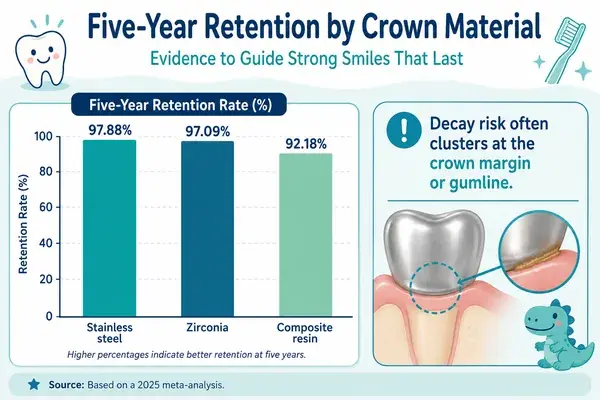
Your child's new crown is the part you don't have to worry about. A 2025 meta-analysis of crowns on baby teeth put five-year retention at 97.88% for stainless steel and 97.09% for zirconia. The cap almost never fails. What fails is the thin seam where the crown meets the gum, and that comes down to how you brush and floss at home. So the real work of caring for a pediatric crown happens at the gumline, where decay actually begins. Keep that seam clean while the tooth waits to shed, and you have done the job. This guide covers every step, including the numb first day, the daily habit that actually matters, and what to do if a crown pops off.
Pediatric crown aftercare is the daily routine that keeps a capped baby tooth healthy until it sheds: gentle brushing twice a day, flossing around the crown's edges, skipping sticky and hard foods that stress the seal, and six-month checkups so decay at the margin gets caught early. That is the whole job. Everything below is detail.

What Should You Do in the First 48 Hours After a Crown?
For the first two days, keep meals soft, keep your child off the numb side, and expect the gum around the crown to be tender. None of that means something went wrong.
Local anesthesia usually wears off in one to three hours. Until it does, a young child will chew a numb lip or cheek without feeling it, which causes real swelling and sores, so watch them until sensation comes back. Serve soft foods that first day: yogurt, eggs, pasta, mashed potatoes, smoothies. Have your child chew on the opposite side for a few days so the fresh cement fully sets. A little gum bleeding when brushing is common for a day or two. Keep brushing gently anyway, because gum tissue that stays clean settles down faster than tissue you avoid. If the crown was placed under sedation, follow the separate recovery notes your dentist sends home.

What Is Normal After Placement, and What Is a Red Flag?
Mild soreness and a little gum bleeding for two or three days are normal. A crown that feels tall when your child bites, swelling that grows, a fever, or pain that gets worse after day three are not.
The gum under a fresh crown can look red and feel sore while it heals, and consistent cleaning is what clears it. Call the dentist if the bite feels "high" (an off bite strains the jaw and the opposing teeth), if the crown wobbles, or if a tooth-colored crown shows a visible chip. Trust your child's report of pain over how the tooth looks. Soreness that climbs instead of fading is the signal to pick up the phone, not to wait it out.
How to Brush and Floss Around a Pediatric Crown
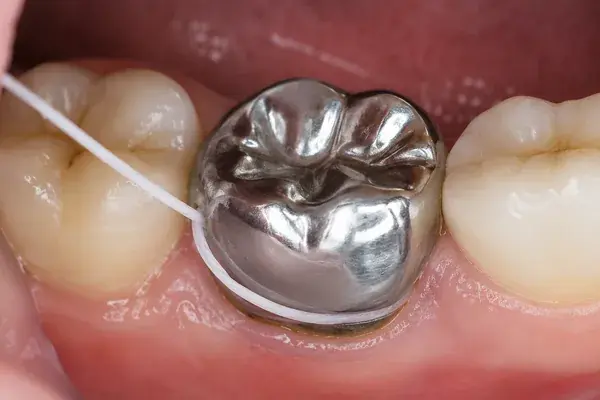
This is the step that decides whether the crown lasts: cleaning the margin, the line where the crown meets tooth and gum. That seam is where decay begins.
Brush twice a day with a soft brush and fluoride toothpaste, using a rice-grain smear under age 3 and a pea-size amount from ages 3 to 6. Tip the bristles toward the gumline and move slowly along the base of the crown. Floss once a day, every day. Around a crowned tooth, curve the floss into a C-shape against the side of the crown and slide it up and down. Do not snap it straight down through the tight contact, which can catch the edge of a stainless steel crown and lift it. Floss threaders or floss picks make snug back-tooth contacts manageable in a small mouth. If your child is under 6, you are the one flossing, since kids do not have the hand control yet. It is the same healthy-teeth habits you already know, aimed at one high-stakes spot.
There is hard data behind that focus. A 2025 meta-analysis in the Interactive Journal of Medical Research found secondary caries in as many as 21.8% of zirconia crowns, and it noted decay was most common in crowns with poor marginal fit. When decay does beat a crown, it starts at that seam. Home flossing is what keeps it out.

Foods to Avoid While the Crown Is in Place
Two food rules protect the seal. Skip anything sticky enough to pull a crown, and skip anything hard enough to crack one.
The sticky pullers are caramel, taffy, Tootsie Rolls, Starburst, Jolly Ranchers, chewing gum, fruit snacks, and gummy vitamins. The hard crackers are ice, hard candy, popcorn kernels, and teeth used to open packaging. Chewy granola bars and dried fruit are the ones parents miss, because they read as healthy while they tug at crown margins. This matters most for tooth-colored crowns on front teeth, which chip more easily than stainless steel, so cut apples and carrots into pieces instead of letting a child bite straight in. None of this is permanent. It is the cost of keeping the seal intact until the tooth falls out on its own.
Crown Care, and Why the Gumline Is the Real Risk
Across every crown material, the cap is rarely the failure point. The gumline seal is.
Crown material | 5-year retention | Where it actually fails | Aftercare priority |
Stainless steel | 97.88% | Decay at the gumline margin | Floss the margin daily |
Zirconia | 97.09% | Chips under grinding; secondary caries up to 21.8% in some studies | Night guard if grinding, floss the margin |
Composite resin | 92.18% | Wear and margin breakdown | Limit sticky snacks, floss the margin |
Pooled five-year retention from a 2025 systematic review and meta-analysis of crowns on primary teeth. Median study follow-up ran 12 to 20.8 months.
Two takeaways sit inside that table. First, stainless steel and zirconia both stay put extremely well, and a 0.79-point retention gap at five years is not worth losing sleep over. Second, the failure that shows up across every material is decay at the margin, and your home care controls it. Zirconia adds one wrinkle: it is more brittle, so a grinder is likelier to chip a white crown than to dent a silver one. The American Academy of Pediatric Dentistry recommends stainless steel crowns for high-decay-risk molars, which is why a dentist often places silver in back and white up front. (At Mini Miners that split is standard, alongside Hall-technique crowns that seal a tooth with no drilling.) Daily care is close to identical either way: clean the margin, keep the food rules, add a night guard if there is grinding, and know how long a crown lasts for the tooth it is on.
Can a Tooth Still Get a Cavity Under a Crown?
Yes. The crown covers the tooth, but the tooth is still alive underneath, and the margin collects plaque like any other surface.
That is why a capped tooth still needs fluoride and still needs cleanings. Decay that starts at the margin can reach the tooth under the crown, and by the time it hurts, the crown usually has to come off. Fluoride hardens the exposed enamel right at that edge. We use a fluoride varnish that lets kids eat and drink right after, so there is no waiting rule to enforce in the car. At each visit, professionally applied fluoride is standard pediatric guidance. Hold the six-month checkup schedule too. On a baby tooth, a new cavity can form in roughly six months, which is exactly the interval that catches it at the margin. If a smaller spot ever calls for a filling instead of a crown, our white filling work follows the same margin-first logic.

What to Do if the Crown Comes Loose or Falls Out
Find the crown, save it, and call your dentist the same day. A crown that is off is not always an emergency, but the bare tooth underneath decays and turns sensitive fast, so it should not sit.
Put the crown in a small bag or container, since a clean, intact crown can often be re-cemented. Do not try to stick it back with household glue. If a baby tooth drops out with the stainless steel crown still attached, that usually just means the tooth reached its natural time to shed, and the permanent tooth is on its way. Manage soreness with your child's usual over-the-counter pain reliever at the label dose, and keep that side clean. Then call. Existing Mini Miners patients reach the on-call pediatric dentist at (303) 500-3202, option #2, and we hold same-business-day visits when we can, which is what our emergency dental care is built for. Waiting a week is what turns a quick re-cement into a new crown or an extraction.
Grinding, Sports, and Getting the Crown to the Finish Line
Nighttime grinding and sports impacts are what wear crowns out early. Both have simple fixes.
Kids who grind (you will hear it at night, or the dentist will spot flattened edges) put side-to-side force on a crown, and that is what chips zirconia and works cement loose over time. A night guard absorbs the load. For contact sports, a mouthguard protects the crown and the teeth around it. And keep the six-month visits, because a crown that reaches the tooth's natural exit has done its full job. First molars usually shed around age 9 to 11. A crown placed at age 4 may need to hold for five or six years, which is why material choice and daily care both matter.
The mental shift that makes pediatric crown care easy: stop thinking about the crown. It is the most reliable thing in your child's mouth right now. Put your attention on the two millimeters of gumline around it, twice a day, and the crown will quietly hold until the tooth falls out on schedule. If a crown ever feels loose, looks chipped, or your child points to it and winces, that is the day to call. You can reach our team at the Erie office and we will take it from there.
Frequently Asked Questions
How do I care for my child's pediatric crown the first day?
Keep food soft, keep your child from chewing on the numb side until feeling returns (usually one to three hours), and have them chew on the opposite side for a few days. Mild gum soreness and a little bleeding when brushing are normal for two to three days. Keep brushing gently, since clean gum tissue heals faster.
Can my child eat normally after getting a crown?
Mostly yes, after a soft-food day right at placement. Once the first 24 hours pass, regular meals are fine. The lasting limits are sticky candies like caramel and taffy, hard items like ice and popcorn kernels, and biting straight into whole apples or carrots with a front tooth-colored crown.
How do you floss around a pediatric crown?
Curve the floss into a C-shape against the side of the crown and slide it gently up and down, rather than snapping it straight down through the tight contact. Snapping can catch the edge of a stainless steel crown and loosen it. For children under 6, a parent should do the flossing, and floss threaders help with tight back-tooth contacts.
What should I do if my child's crown falls out?
Save the crown, skip any household glue, and call your pediatric dentist the same day. The bare tooth underneath can decay and turn sensitive quickly, so a lost crown should not wait even though it is not always an emergency. If a baby tooth falls out with the stainless steel crown still attached, that usually just means the tooth reached its natural time to shed.
Can a tooth still get a cavity under a dental crown?
Yes. The tooth under the crown is still living, and the margin at the gumline collects plaque like any other surface. A 2025 meta-analysis found secondary caries in as many as 21.8% of zirconia crowns, most often where the crown's edge fit poorly. Daily flossing at that edge, fluoride, and six-month checkups are what keep decay out.
Do stainless steel and zirconia crowns need different care?
Daily care is nearly the same: clean the gumline margin and follow the food rules. The one difference is that zirconia is more brittle, so a child who grinds should wear a night guard to avoid chipping it. Both hold up well, with five-year retention of 97.88% for stainless steel and 97.09% for zirconia.
How often should my child see the dentist after getting a crown?
Every six months, the same as the standard checkup schedule. On a baby tooth, a new cavity can develop in roughly six months, so that interval catches decay at the crown margin before it reaches the tooth. These visits also let the dentist confirm the crown is still sealed and sitting correctly.


Comments