Orthodontic Treatment For Children In 2026: What Every Parent Should Know
Orthodontic treatment for children breaks down into three stages: early intervention (ages 6–10), active treatment (ages 11–14), and retention. Each stage targets different problems at different points in your child's jaw and tooth development. The national cost for a full course of treatment runs $3,000–$7,000 for standard metal braces, according to 2025 orthodontic clinic data, though early-phase work alone can cost $1,000–$3,500.
Orthodontic treatment for children is any planned correction of tooth alignment, bite problems, or jaw growth issues using braces, expanders, aligners, or retainers. The American Association of Orthodontists recommends a first evaluation by age 7, and roughly 67.6% of orthodontic patients are under 18, per IBISWorld's 2025 industry report.
Most parents I've worked with assume orthodontics is just "braces in middle school." It's not. And that misunderstanding costs families time, money, and sometimes a second round of treatment that could have been avoided.

What Are the Three Phases of Orthodontic Treatment for Children?
The standard orthodontic process follows three distinct phases. Not every child needs all three. That's a point worth repeating, because a lot of practices push two-phase treatment as the default when common pediatric dental procedures can address minor issues without the full sequence.
Phase 1: Early Intervention (Interceptive Orthodontics)
This phase typically happens between ages 6 and 10, while baby teeth and permanent teeth overlap. The goal isn't a perfect smile. It's about fixing one or two specific structural problems: crossbites, severe crowding, underbites, or habits like thumb-sucking that are actively reshaping the jaw.
Palatal expanders, space maintainers, and partial braces are the typical tools here. Phase 1 usually lasts about 12 months and targets a single issue.
Here's the contrarian take most practices won't give you: Phase 1 isn't always necessary. The AAPD's 2024 clinical guidelines on developing dentition management confirm that early intervention helps with specific conditions, but some children do just as well skipping straight to Phase 2. I've seen families spend $1,000–$3,500 on Phase 1 without meaningfully reducing Phase 2 duration or cost. Always ask: "What changes if we wait?"

Phase 2: Active Treatment
This is the braces-and-aligners stage most people picture. It starts between ages 11 and 14, once most permanent teeth are in place. Orthodontics treatment runs 18–24 months on average.
Your options have expanded. Traditional metal braces still handle complex cases best and cost $3,000–$7,000. Ceramic braces run $4,000–$8,500. Clear aligners like Invisalign First or Teen range from $3,000–$9,000, but compliance is the real issue with kids. Orthodontists consistently report that children under 12 struggle to wear aligners the required 20–22 hours per day.
During Phase 2, regular dental cleanings matter more than ever. Brackets and wires create hiding spots for plaque, and kids with braces are significantly more prone to cavities if hygiene slips.
Phase 3: Why Is Retention the Most Overlooked Stage?
Retention is the phase parents forget about, and it's the one that determines whether the first two phases stick.
After braces or aligners come off, your child gets custom retainers. The standard recommendation from both the AAO and AAPD is long-term (often lifelong) wear, at least at night. This isn't optional. Teeth start shifting back within one to two years without consistent retainer use. Re-treatment costs another full $3,000–$7,000. That makes a $200 retainer the best investment in the entire process.
Does Early Orthodontic Treatment for Children Actually Save Money?
Sometimes. But not always, and anyone who tells you otherwise is oversimplifying.
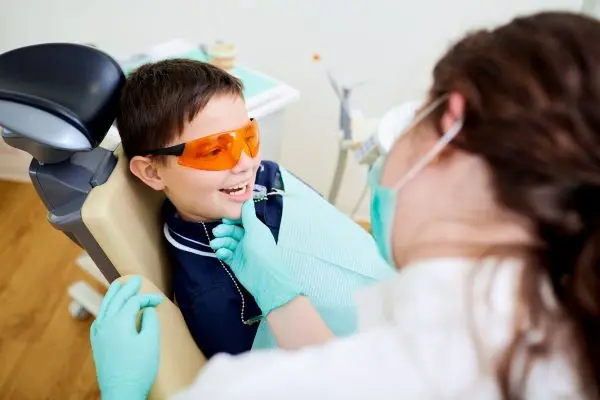
Early treatment works well for crossbites, ectopic teeth, and jaw growth problems where waiting would mean surgery later. For mild crowding or spacing? The AAO's own 2026 two-phase treatment review acknowledges that total treatment time and cost can be similar whether you start at 7 or wait until 12. The difference depends entirely on the specific problem.
What early evaluation does guarantee is information. At age 7, a child's mix of baby and permanent teeth tells an orthodontist a lot about what's coming. A practice that understands tooth eruption patterns can spot problems two or three years before they become expensive.
The AAO's 2025 Economics Survey reported record patient starts, with an average of 696 patients per member practice. That volume growth means more families are catching issues early, and working with a team that knows pediatric dental care makes the timing conversation much easier.
Book Your Child's Orthodontic Evaluation at Mini Miners
Orthodontic treatment for children doesn't follow one script. Your child might need all three phases, or they might skip Phase 1 entirely and start with braces at 12. The only way to know is an evaluation, ideally by age 7.
At Mini Miners Pediatric Dentistry, we walk families through what's actually needed (not what's theoretically possible) and build a plan around your child's specific bite, growth pattern, and budget. Preventive care starts early, and orthodontic planning should too.
The Bottom Line on Your Child's Orthodontic Journey
Orthodontic treatment for children isn't a one-size-fits-all process, and that's actually good news. It means you have options. The key takeaway is simple: get an evaluation by age 7, but don't let anyone rush you into treatment your child doesn't need. Ask hard questions about Phase 1 necessity, weigh the real compliance demands of aligners versus braces, and never underestimate the power of a $200 retainer to protect thousands of dollars in treatment. The families who get the best outcomes aren't the ones who start earliest or spend the most, they're the ones who work with a provider who's honest about what's actually necessary. Your child's teeth, timeline, and budget are unique. Make sure their treatment plan is too.
Frequently Asked Questions
How much does orthodontic treatment for children cost in 2026?
National averages for standard metal braces run $3,000–$7,000 for Phase 2 (comprehensive) treatment. Phase 1 alone typically costs $1,000–$3,500. Clear aligners and ceramic braces push the range higher, from $4,000–$9,000 depending on case complexity. Most dental insurance plans cover $1,000–$3,000 of orthodontic treatment as a lifetime maximum.
Is Phase 1 orthodontic treatment always necessary?
No. Phase 1 targets specific structural problems like crossbites, severe crowding, or harmful oral habits. The AAPD's 2024 guidelines confirm that some children achieve equal results with single-phase comprehensive treatment starting around age 11–12. Ask your orthodontist what measurable outcome Phase 1 will produce before committing.
When should my child first see an orthodontist?
The American Association of Orthodontists recommends an initial evaluation by age 7. At that age, your child has a mix of baby and permanent teeth that reveals potential alignment and bite issues years before they become serious. An early visit doesn't mean early treatment. It means early information.
What happens if my child doesn't wear their retainer?
Teeth begin shifting back toward their original positions within one to two years without consistent retainer wear. Re-treatment costs the same as the original treatment ($3,000–$7,000 or more). Both the AAO and AAPD recommend long-term, often lifelong, nighttime retainer use after active treatment ends.
Are clear aligners a good option for kids under 12?
Clear aligners like Invisalign First are approved for younger children with mild to moderate alignment issues. The catch is compliance. Kids need to wear aligners 20–22 hours per day, and orthodontists report that children under 12 often fall short. For complex cases or low-compliance patients, traditional braces remain more reliable.
How long does orthodontic treatment for children take?
Phase 1 (early intervention) typically runs about 12 months. Phase 2 (active braces or aligners) averages 18–24 months. Total treatment time depends on the severity of the issue, the type of appliance used, and patient compliance with instructions and retainer wear.
Does early orthodontic treatment reduce the need for tooth extractions?
In specific cases involving severe crowding or ectopic teeth, yes. Early expansion or space maintenance can create room for incoming permanent teeth. But for mild crowding, studies show that early treatment doesn't consistently reduce extraction rates compared to waiting for single-phase treatment. The answer depends entirely on your child's specific diagnosis.


Comments